
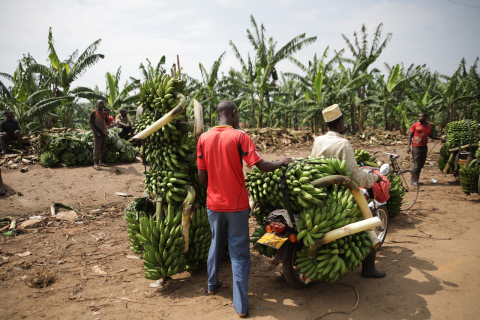
"Carbon pricing in the Global South should be combined with cash transfers"
Carbon pricing is an important instrument for reducing carbon emissions. In the Global South, however, if poor people are not compensated, there is a risk of malnutrition and deforestation. A study by EfD and MCC researchers calculates how climate protection and development can go hand in hand.
If fossil fuels were priced at 40 dollars per ton of CO2 in Uganda, the seemingly tiny burden of 3 dollars per household annually would reduce emissions by 18 percent.
However, people would only eat half as much fruit and vegetables, for example, if the burden is not compensated. And they would collect 10% more firewood.
The Berlin climate research institute, MCC presents this scenario in Environment and Development Economics.
“In our study, we show how climate policy in a low-income country in sub-Saharan Africa affects the economic welfare of private households,” says EfD researcher Raavi Aggarwal.
All are affected by indirect price increases
“Carbon pricing in Uganda will affect energy demand, how biomass is used, and the quality of nutrition differently than in industrialized countries.”
Only a minority is directly affected: one in three households has access to kerosene, the fossil fuel most commonly used in Uganda for cooking. By contrast, all households feel the indirect effects through the production costs of other goods, such as food.
Can lead to unbalanced diet
The demand for cereals, which are produced with relatively low carbon emissions, nearly doubles, and demand for meat, fish, and vegetables falls by over 50 percent, and for fruit by 15 percent. This radically unbalanced diet leads to a 20 to 30 percent lower intake of proteins and micronutrients, for both rich and poor, urban and rural populations.
“Carbon pricing is indeed the most efficient form of climate protection for the Global South as well,” emphasizes Jan Steckel, co-author of the study.
“But from a development policy perspective, it is only an option if the revenues are paid back to the population.”
The model study calculates a variant with the entire revenue redistributed in the form of a uniform per-capita payment, in which the negative effects disappear for most of the population.
“This is still the subject of further research, but subsidies for emission-free cooking stoves, for example, have proven to be effective.”
Read the article.

EfD Ghana builds strategic capacity for researchers
In the dynamic landscape of academic research, connecting with experienced researchers and global...

EfD study revealed hidden risks of environmentally friendly alternatives
An EfD-study uncovered a surprising paradox: environmentally friendly alternatives can lead to...
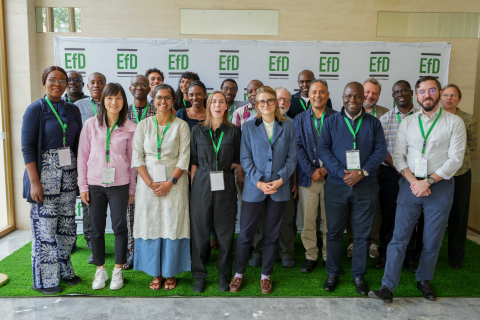
EfD project features Voluntary Carbon Markets in the Global South
Carbon markets are increasingly being recognized as an important instrument to reduce global...
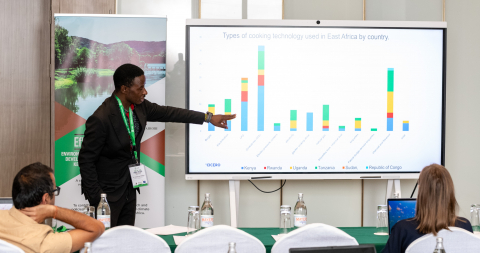
EfD research in 2024 – a year of growth, increased collaborations and impact
EfD researchers increased their academic publishing considerably in 2024 compared to previous years...