Building trust among stakeholders was key for successful policy engagement in fisheries
EfD Colombia’s researchers show that involving experts from public institutions at an early stage and as co-authors in scientific publications helps build trust between researchers, policymakers, and stakeholders that paves the way for impact. Their example also shows that this trust can provide access to valuable data and insights from stakeholders.
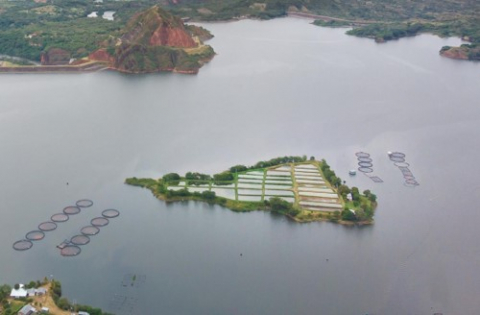
Jorge Marco Renau and Diego Valderrama, EfD Colombia researchers, have conducted policy-relevant research on fisheries and aquaculture in Colombia since 2017. They studied fisheries of queen conch and industrial shrimp from 2017 to 2021 and aquaculture of tilapia from 2021 to 2024.
Bioeconomic models helped combine economy and sustainability
In the first stage of the research, they used the Fisheries Performance Indicators (FPI) to assess the economic, social, and environmental sustainability of fisheries sectors. These indicators are based on three definitions of sustainability: social, environmental, and economic.
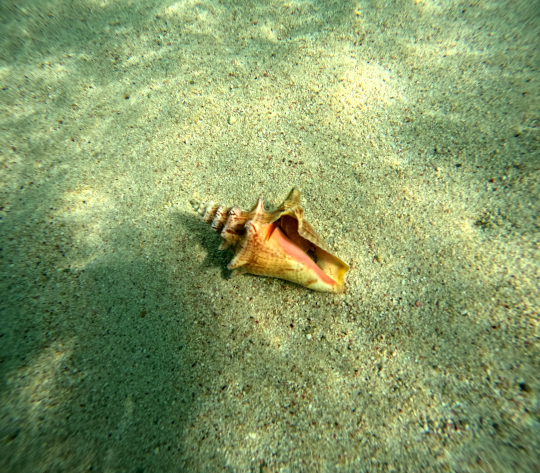
The FPIs indicate that the queen conch fishery in the Colombian Caribbean is an industry on the verge of collapse, facing issues with monitoring, illegal, unreported, and unregulated fishing, as well as overfishing. Nevertheless, this marine resource symbolizes a social and cultural identity for the raizales (a native community). Additionally, it holds significant economic value, as queen conch pearls can sell for as much as USD 120,000 on international markets.
The study was complemented by a bioeconomic model to identify optimal exploitation strategies for the queen conch. It provided valuable economic insights to inform policy-making, demonstrating that implementing a rotational harvesting scheme with periodic closures significantly enhances both the ecological and economic sustainability of the fishery.
In another study, they applied the FPI to the industrial deep-sea shrimp trawl fishery in the Colombian Pacific, assessing its performance before and after implementing marine protected areas and enhanced control of overfishing. The analysis showed that regulatory reforms increased stock size, reduced bycatch, and improved food security, and local labor conditions.
From fisheries to aquaculture
For the second stage of this program, 2021-2024, the researchers transformed the FPI methodology into the aquaculture performance indicators (API). They studied the sustainability of cultured fish species, such as rainbow trout, cachama, and shrimp. They found that the export sector of the tilapia industry in Colombia achieved acceptable scores, but the domestic sector's performance was deficient, particularly in the economic and social dimensions.
Key to success: Involving stakeholders and sharing information
“Many researchers from the US and Europe come to Colombia to study fisheries. They do fieldwork, collect data, and publish their research, but don’t share the results and data with stakeholders, and they don’t communicate their findings. This erodes trust between researchers, fishing communities, and public institutions. So, our first task was to build trust,” says Jorge Marco Renau.
The researchers engaged the Colombian institution's scientific experts as co-authors and committed to sharing data and results and being transparent with information.
They conducted research with Mario Rueda, Scientific Director at INVEMAR (the Colombian scientific institution for marine and ocean ecosystem studies). He shared scientific data and facilitated contact with fisher communities and local fishing corporations.
He also informed the policymakers at the Ministry of Environment of Colombia and public institutions about the results of these studies. He maintains strong connections with these institutions and offers them ongoing scientific advice.
No lack of data – but lack of access
This ensured that research findings were not only accessible and verifiable but also used to address technical challenges and serve the public interest. Moreover, the commitment of locally based researchers in Colombia to share the research results was also important.
Mario Rueda also introduced Mónica Vasquez, at FEDEACUA (the Colombian Federation of Aquaculturists), to the researchers. FEDEACUA facilitated the researchers’ access to tilapia producers, organized field trips, and assisted with data collection.
The researchers found that many institutions possess valuable databases and grey literature, such as technical reports, of great interest but not easily accessible to them. It’s often said that countries in the Global South struggle with data scarcity. However, the main challenge lies in the accessibility rather than the existence of information.
The impact of studies
"The big tilapia producers have some information about the environmental and social impacts of their activity, but many small producers do not. We have now started filling in this knowledge gap," said Mónica Vasquez.
Mario Rueda explains that "this research method gives an understanding and policy application for local authorities and fishing communities. It indicates how much and when to fish, what the environmental impact is, what the health state of the fish is, and how fishing contributes to the economic and social welfare of the fishing communities".
IGE Fellows contributed to national plans for clean cooking
How can we involve the private sector in a transition to clean cooking in Ethiopia? This was the...
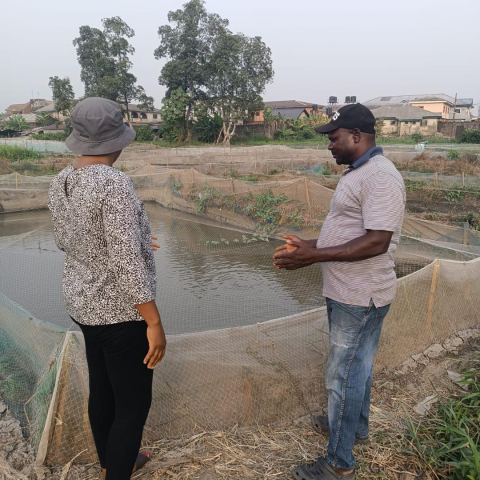
Fish farmers record 20 percent better yield one year after EfD training
Nigeria's aquaculture industry has received a significant boost, thanks to EfD Nigeria’s effort to...
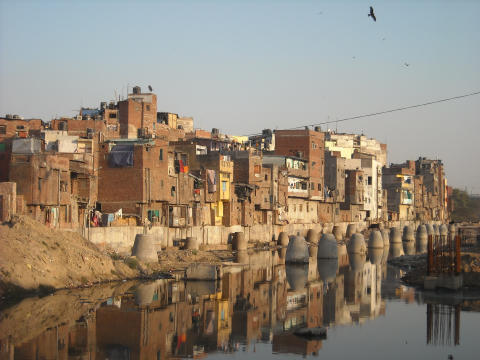
Rising temperatures cause lost incomes for informal workers
A study by EfD researchers Saudamini Das and E. Somanathan found that high temperatures cause...
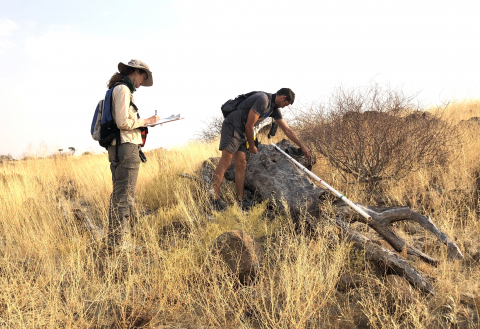
New method helps assess climate vulnerability of protected areas
Climate change is a challenge for Protected Areas (PA), such as national parks. It can affect...
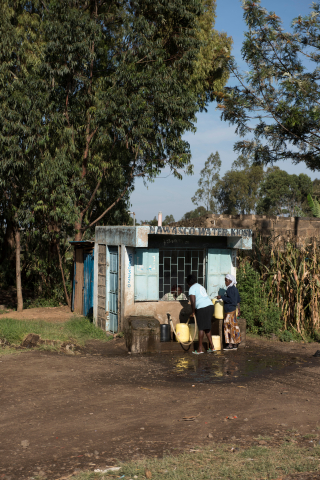
Researchers and water company collaborates - poor people could buy more water
A team consisting of EfD Kenya, international associates, and the Nairobi City Water and Sewer...
EfD-funded project using laser technology improves rice farming in Vietnam
After three years of implementation, a laser-assisted land leveling project in the Mekong Delta of...