The IGE program promotes research-policy interaction and green transitions
The Inclusive Green Economy in Practice program (IGE) targets senior civil servants and policymakers in Eastern Africa, focusing on environmental issues, economics, and social inclusion. It addresses global and local environmental challenges and emphasizes public participation and social acceptance of green transitions. The program runs from 2023 to 2028.
Key objectives include strengthening capacities for an inclusive green economy aligned with Agenda 2030 and promoting environmental-economic policy instruments. Target countries are Ethiopia, Kenya, Uganda, Tanzania, and Rwanda, with the EfD centers and Global Hub as key collaborating partners.
The program facilitates peer learning and networking across academia and government ministries and agencies, involving joint work and cross-country exchanges.
“We can see that this program has indeed built bridges between the researchers and civil servants, which facilitates intensified collaboration towards a more inclusive green economy,” says Anders Ekbom, IGE Program Leader, EfD, University of Gothenburg.
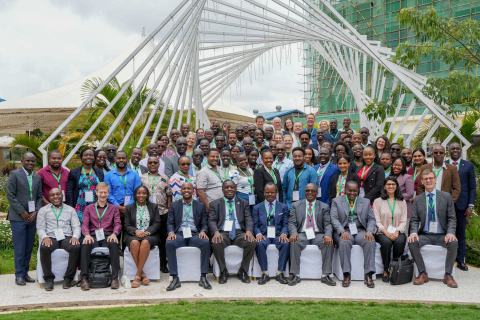
In 2024, 25 civil servants were enrolled for 12 months, participating in on-the-job training, workshops, policy dialogues, and in-service work, online and in person.
Transformation Initiatives (TI) are in-service works led by the program’s civil servants. They aim to promote organizational changes, research-policy interaction, and policies supporting an inclusive green economy. The thematic focus for the 2024/2025 cohort was on sustainable energy transition, especially reducing emissions and increasing energy efficiency.
“We can also see tangible results from previous participants in the programs as their TIs are being used in plans and policies. One example is the Ethiopian team’s TI on how to increase the engagement of the private sector in expanding clean cooking practices, which was included in two major national plans. Another is the IGE fellows in Uganda’s Ministry of Energy and Mineral Development who, together with EfD researchers, participated in developing sustainable energy development in Uganda’s Fourth National Development Plan,” says Emelie César, co-program leader, EfD, University of Gothenburg.
“There is a knowledge gap on how to implement green economy policies”
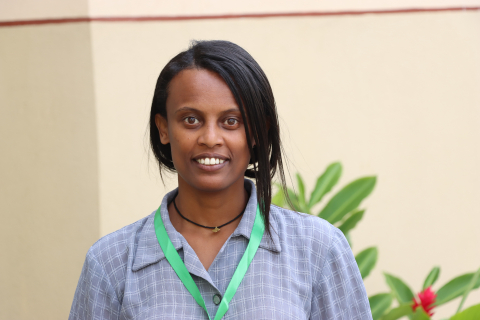
Hana Mekonnen Alemu is one of Ethiopia's 2023/24 IGE Fellows. She is a Climate Change Expert at the Ministry of Water and Energy. Her cohort focused on policies that support clean cooking practices and reduce dependence on biomass. Meet Hana Mekonnen Alemu and hear her reflections on the IGE program!
Why did you want to join the IGE program?
I heard from previous IGE Fellows that it’s a good learning platform and a great network. I definitely need this kind of platform.
What are the biggest obstacles in Ethiopia in implementing inclusive green policies for clean cooking?
There are many! Clean technology is expensive. Also, it’s often not tailored to the needs. Donors sometimes dump technological solutions that don’t fit, such as improved cookstoves that don’t work with porridge pots. There are also cultural preferences, for instance, that coffee tastes better when you cook with charcoal or wood. Many are afraid of LPG and electricity. In the government, there are currently no political commitments or a specific organization for this transition.
How does the IGE program fit in with your daily work?
There is a knowledge gap on implementing green economy policies that can be filled through this program. We have learned a lot from the other countries in the program, which is very valuable and related to our daily work. Not everything is applicable because you have to customize your policies to your country’s context. We can now share the knowledge with colleagues, other managers, decision-makers, and organizations.
Is there something that can be improved about the program?
As we have identified, there is a lack of political commitment, so it would be good to include political decision-makers in the program somehow.
What is your main reflection after meeting the IGE Fellows from the other countries?
They want to make a change. There is a growing awareness and a wish to change the traditional perceptions.
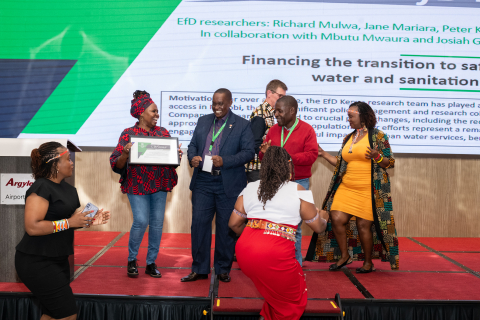
EfD Policy Impact Award encourages policy-relevant research and stakeholder engagement
The EfD Policy Impact Award was presented for the third time at the EfD Annual Meeting in Nairobi in...
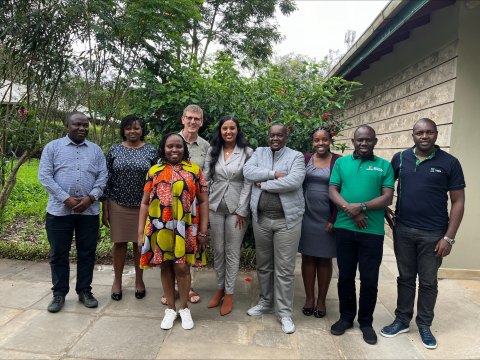
EfD develops a handbook for policy engagement and impact
While researchers are well-trained in conducting research and teaching, few receive guidance on...
EfD’s Policy Day: Clean energy, transport and industry in focus
Policymakers, researchers, and industry experts gathered at the EfD Policy Day 2024 to discuss the...