Resource Rents, Genuine Savings and Sustainable Development: Revisiting the Evidence

Submitted by Petra Hansson on

Economic theory on sustainable development suggests that resource-rich countries should reinvest the rents from natural resource extraction in other forms of capital to ensure that future consumption level of the economy can be greater than or at least equal to the level of their current consumption. Several seminal papers in the early 2000s indicated that the correlation between genuine savings and future consumption was weaker than theory predicted, at least when genuine savings were measured using the World Bank estimates.


poster

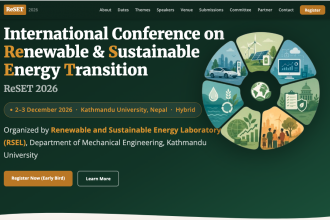
ReSET 2026: Call for abstracts and full papers

The International Conference on Renewable & Sustainable Energy Transition (ReSET) 2026 brings together global and regional experts, researchers, practitioners, policymakers, industry leaders, civil…

Date: Wednesday 2 December 2026 — Thursday 3 December 2026
Location: Kathmandu University, Nepal - Hybrid

Consensus or cheap talk? The discursive politics of South Africa’s just energy transition

Submitted by Arnaaz Zaman on

The just transition concept has been hypothesised to serve as a unifying framework for designing socially accepted fossil fuel phaseout policies. Whether the concept actually moves actors towards political consensus remains contested. Using South Africa as an example and leveraging text-as-data approaches, the authors map public debate of just transitions and examine whether introduction of the Just Transition Framework and Just Energy Transition Partnership re-orients or reinforces existing actor positions.

Energy