A new international study finds that environmental and social costs in global supply chains are often concentrated in producing countries such as Vietnam and Peru, while higher-value activities remain elsewhere.
The research examines global supply chains in sectors including textiles, coffee, mining, and agriculture in Vietnam, Peru, and Italy. It shows how environmental damage, water stress, and labor pressures are frequently concentrated in producing countries, while higher-value activities such as branding, design, and retail remain concentrated elsewhere.
The study was published in 2026 through the SPES Project, a Horizon Europe-funded research consortium examining sustainability and global value chains.
For Vietnam, the findings raise important questions about how export-led growth can become more environmentally sustainable and socially inclusive.
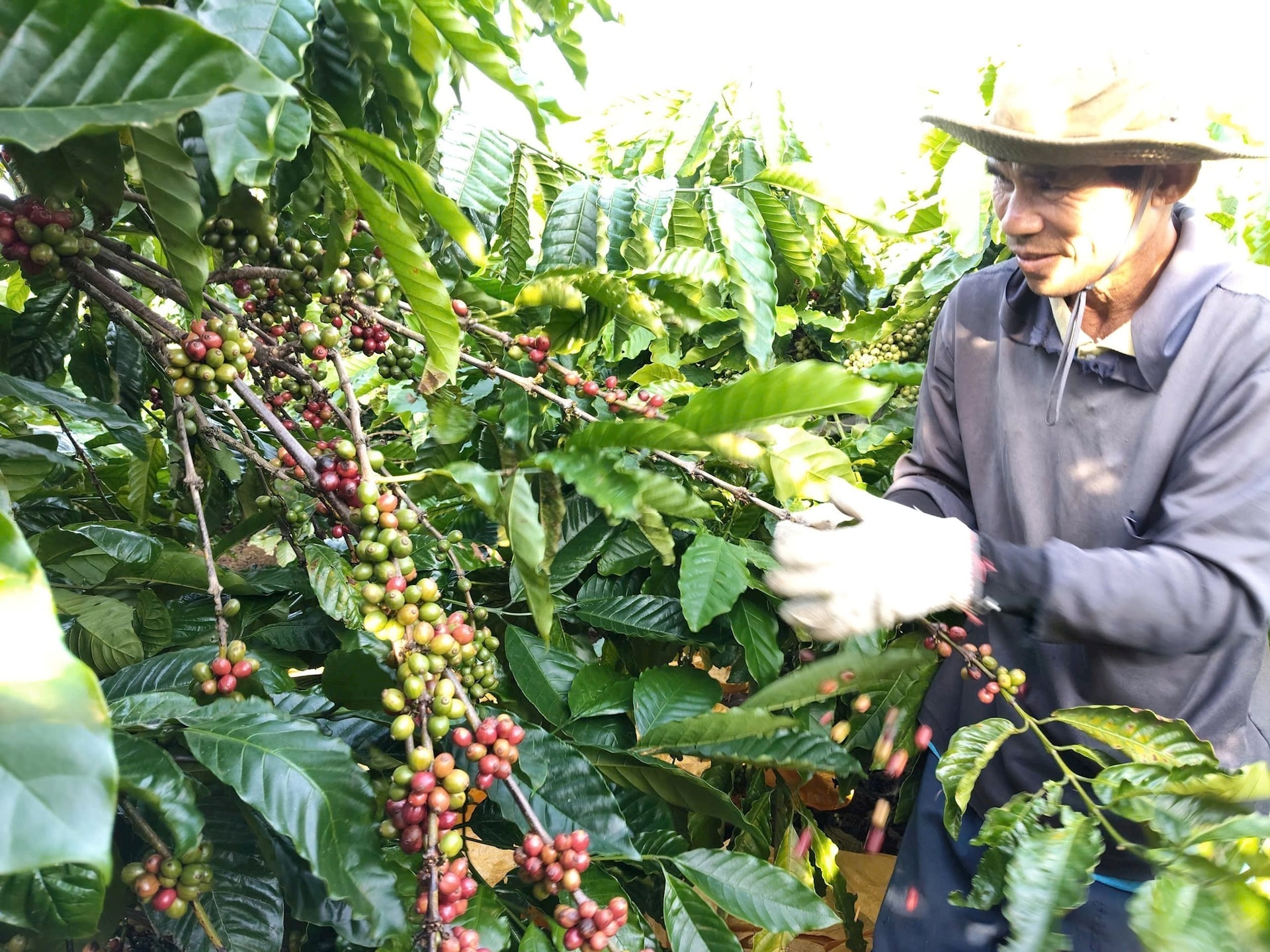
Farmers harvesting coffee cherries in Vietnam’s Central Highlands. (Photo: VNA)
Vietnam’s export success comes with hidden costs
Vietnam has become one of the world’s leading exporters of garments and coffee. But the research suggests that many Vietnamese producers remain locked into the lowest-value parts of global supply chains.
In the textile and clothing sector, Vietnam mainly specializes in labor-intensive manufacturing stages such as cutting and assembly. Researchers found that the country still depends heavily on imported export-quality fabrics, limiting opportunities for domestic firms to move into higher-value activities.
At the same time, environmental and labor pressures remain significant.
The study identifies textile dyeing and finishing as major environmental pressure points because they require large amounts of water and chemicals. Workers also face long hours, low wages, and limited opportunities for skills upgrading, particularly older female workers who often experience growing job insecurity later in life.
Vietnam’s coffee sector faces a different set of sustainability challenges.
The country is one of the world’s largest coffee producers, but many smallholder farmers remain vulnerable to climate shocks, rising costs, and environmental degradation. Researchers found that over-irrigation, intensive fertilizer use, and soil degradation are placing increasing pressure on farming systems in the Central Highlands.
“Coffee farmers in the Central Highlands have benefited from higher incomes in recent years due to high global coffee bean prices, yet intensive fertilizer use and growing competition for groundwater create environmental and social costs,” said Ho Quoc Thong, EfD Vietnam, and one of the researchers in the project.
Small farmers often lack the financial resources and technical support needed to adopt more sustainable practices, making adaptation more difficult.
Sustainability standards can create new barriers
The study also examines how international sustainability regulations affect producers in the Global South.
One example is the European Union’s Deforestation Regulation, which requires exporters to prove that products such as coffee are not linked to deforestation. While the researchers describe these goals as important, they warn that compliance can be difficult for small farmers and firms with limited access to technology, certification systems, or financing.
The researchers identify three major patterns across global supply chains:
- environmental and social costs are concentrated in weaker parts of the chain,
- global sustainability standards often move faster than local implementation capacity,
- and lead firms continue to control the highest-value activities, limiting upgrading opportunities for producers.
Rethinking sustainable competitiveness
The study argues that sustainability policies should not focus only on compliance requirements. Instead, they should also support producers through financing, infrastructure, technical assistance, and innovation partnerships.
According to the researchers, sustainability and competitiveness should be understood together rather than as competing goals. The report calls for global production systems that are not only efficient but also environmentally sustainable, socially inclusive, and more resilient to future shocks.
“Sustainable development requires coordinated collective action, and the government has a central role in facilitating this process through well-designed policies, data infrastructure, and cross-sector collaboration,” said Ho Quoc Thong.
About the study
The paper, Global sustainability in an interconnected world: The role of the EU in trade and value chains, is part of the SPES Project funded through the European Union’s Horizon Europe program. The research draws on interviews with industry representatives, policymakers, researchers, and producers in Vietnam, Peru, and Italy.
Dr. Ho Quoc Thong of the University of Economics Ho Chi Minh City (UEH) and EfD Vietnam contributed to the research.