EfD Webinar series: Bui Bich Xuan
Welcome to attend this free online EfD Webinar! Time: February 26, 2025, 1.00 -2.00 p.m. (CET) Presenter: D r Bui Bich Xuan. Topic: Factors affecting compliance with rights-based fisheries management…
Welcome to attend this free online EfD Webinar! Time: February 26, 2025, 1.00 -2.00 p.m. (CET) Presenter: D r Bui Bich Xuan. Topic: Factors affecting compliance with rights-based fisheries management…
Key Messages
|
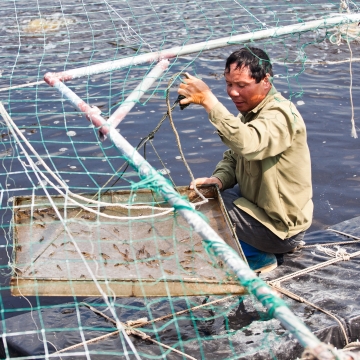
This study evaluates the Vietnamese shrimp farming industry through a Triple Bottom Line (TBL) perspective, using the Aquaculture Performance Indicators (API) to assess social, economic, and environmental performance. Over the past 25 years, Vietnamese shrimp farming has grown rapidly and diversified into four systems: Extensive, Semi-intensive, Intensive, and Super-intensive, and data is collected for all these systems.
Abstract: Kenya, like many other countries, is increasingly relying on a Blue Economy approach to ensure its sustainable development, an approach founded on the premise of poverty eradication by providing sustainable livelihoods and decent work, supplying food and minerals, generating oxygen, absorbing greenhouse gases, mitigating the impacts of climate change, and serving as highways for sea-based international trade.
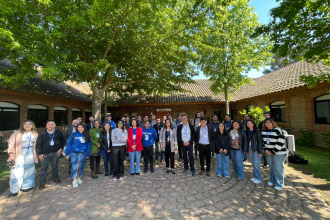
More than 60 participants from academia, policymakers, NGOs, and environmental organizations convened on October 24th and 25th at the Tenth Annual Meeting of NENRE EfD Chile to discuss and address the…
Key Messages
● Consumers may avoid consuming mussels if they perceive a high risk of HAB contamination, even under government monitoring.
● HABs have significant welfare losses for consumers, but policies to ensure food safety in seafood markets can improve social welfare.
● Perceptions about HABs and mussel attributes play a role in explaining consumer preferences, but the link varies across contexts.
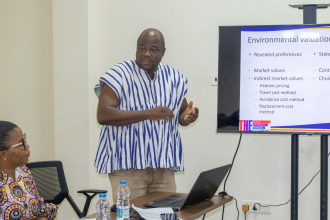
In today’s fast-evolving research field, targeted training and interaction with experienced researchers are crucial for equipping young scholars with the confidence and skills to contribute…

At a recent seminar hosted by EfD Ghana, participants called for urgent policy changes to address inefficiencies in Ghana’s artisanal fishing sector. Titled “ Is Premix Fuel Subsidy in Ghana’s…
As the world’s largest producer of fish, China has faced significant challenges in developing its fisheries. Over the past four decades, China has implemented and adjusted multiple regulations and measures to reverse the decline of aquatic resources and achieve sustainable fisheries. This study analyzes the production trends and efforts during the period 1980–2019, highlighting the key features of and structural shifts in China’s fisheries. Our results reveal a significant shift in seafood production from capture to aquaculture and from offshore to inshore waters.