
EfD Webinar series: Håkan Eggert, University of Gothenburg
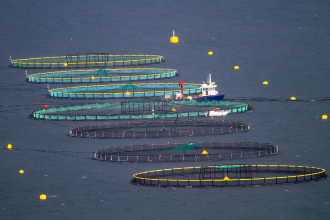
Welcome to attend this free online EfD Webinar! Time: 14.00-15.00 CEST Topic: Environmental, Economic, and Social Sustainability in Aquaculture: The Aquaculture Performance Indicators.
This study applies Value-Belief-Norm (VBN) theory to investigate fishers' pro-environmental behavioral intention and their support for policies to reduce marine litter. While pro-environmental behavioral intention is often associated with personal environmental intention at the household level, policy support represents their support for government action at the political level. Therefore, we examine whether fishers are willing to engage in both of these dimensions. Data from 369 Vietnamese fishers are analyzed using structural equation modeling with FIMIX-PLS and PLS-POS.
Questions:
1. Is tilapia production in Huila a sustainable endeavor from the Triple Bottom Line (Economic, Social, Environmental) perspective?
|
2. Are there any significant differences in sustainability performance between the export- and domestically-oriented sectors? Key Messages |
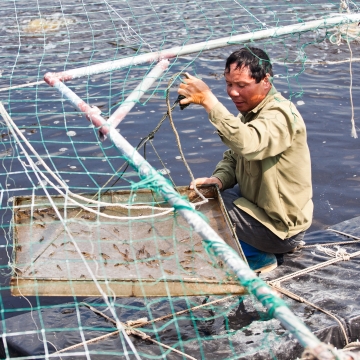
Researchers from EfD Vietnam and Uganda will analyze how fish farmers in those countries perceive risks, in particular climate-related risks, and how they adapt to those risks since they are…
Research fellows and graduate students taking environmental-related courses at Makerere University have been retooled on communicating research findings. The training was part of the EfD-Mak seminar…
For centuries resource economists have persistently debated and discussed the potential of the green economy and how it should be protected and used sustainably. Most studies to date on the economic value of natural resources have thus concentrated on the green economy and how countries could harness its resources to achieve growth and development. However, perhaps the blue economy (i.e., ocean resources) could also help achieve growth and development. Studies on the blue economy are concept notes, reports and literature reviews on the evolving definition of the concept.
According to Chilean legislation, a salmonid concession holder must choose between two mutually exclusive stocking density systems: Stocking Reduction Percentage (SRP) or Stocking by Density. This study identifies the main determinants in the choice of stocking system and estimates their marginal effects. The results suggest that if the previously stocked species is Atlantic salmon (Salmo salar), the probability of stocking by SRP increases by 36.6%.