
Environmental Impacts and Policy Responses to Covid-19: A View from Latin America
COVID-19 is currently having major short run effects with possible serious long run implications for the environment and the management of natural resources in Latin America. We discuss the possible effects of the pandemic on air pollution, deforestation and other relevant environmental dimensions across the region. With contributions from environmental economists from eight countries, we give an overview of the initial and expected environmental effects of this health crisis.

A new chapter on Environemtal Economics & Management added to the Vietnam Law on Environmental Protection
It is a long journey from emerging ideas to the intermediate research results, then policy implication and finally its implementation. During last decade, EfD-Vietnam researchers have explored and
|
Vietnam
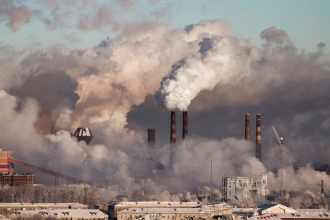
New EfD video on Carbon Pricing
A price on carbon? This is now a popular phrase in growing economies and business, where countries are moving towards putting a price on carbon pollution as a means of bringing down emissions and…
Determinants of Soil Conservation Technologies Among Small-Scale Farmers in Tanzania; Evidence from National Panel Survey
EfD Authors:
The adoption of Soil Conservation Technologies (SCTs) in Tanzania is very low compared to other countries in Africa with related situation. Interventions were taken by introducing soil conservation practices. However, the adoption of these practices is far below the expectation. The objective of this study was to examine the determinants of SCTs among maize small-scale farmers in Tanzania. Secondary data from the National Panel Survey was used in this study. A binary probit regression model was employed to analyse the data.
The influence of energy policy on charcoal consumption in urban households in Tanzania
EfD Authors:
The sustainability of energy use in the residential sector has relevance for global initiatives to achieve sustainable development and limit climate change.
Program Officer Office for West Africa Lagos, Nigeria
MISSION OF THE FORD FOUNDATION
The Ford Foundation is an independent, nonprofit grant-making organization. For more than 80 years it has worked with visionary leaders on the frontlines of social change worldwide, guided by its mission to strengthen democratic values, reduce poverty, social inequality and injustice, promote international cooperation, and advance human achievement. With headquarters in New York, the foundation has ten regional offices in Africa, Asia and Latin America.
SUMMARY DESCRIPTION
EfD's Annual Meeting 2022
After two years of virtual meetings, the EfD Annual Meeting returned in a hybrid format. Hosted by the EfD center at Makerere University with support from the Global Hub, the EfD Annual Meeting was held in Uganda on September 22–26, 2022.
From 2007 until 2019 the EfD Annual Meeting has evolved to become one of the largest and most vibrant conferences in the Global South on the application of environmental and resource economics.
The conference had a combination of scientific and policy keynotes with thematic parallel sessions and workshops.
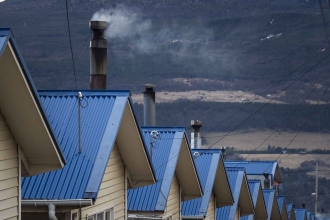
EfD researchers explore the effects of Covid-19 on relevant environmental dimensions across Latin America
A new multiauthor-perspective article discusses the potential effects of Covid-19 across Latin American countries. It also proposes an agenda for future research as a manner of contributing to a…