

Local studies provide a global perspective of the impacts of climate change on indigenous peoples and local communities
EfD Authors:
AbstractIndigenous Peoples and local communities with nature-dependent livelihoods are disproportionately affected by climate change impacts, but their experience, knowledge and needs receive inadequate attention in climate research and policy. Here, we discuss three key findings of a collaborative research consortium arising from the Local Indicators of Climate Change Impacts project.
Public opinion on carbon pricing and revenue uses in East Africa
EfD Authors:
Foreword by EBA
The ongoing climate crisis calls for radically reduced emissions of greenhouse gases. Although low- and lower-middle-income countries may have small or minimal climate footprints compared to richer countries, reductions are key also in those countries, not least since future consumption is likely to increase with increasing economic growth and population.

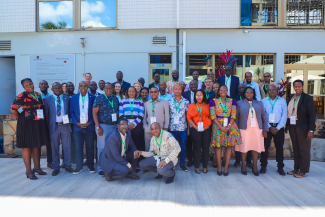
Policymakers and researchers make joint efforts to address biomass dependency
More than three billion people globally rely on biomass fuels, such as coal, charcoal, and firewood for cooking and heating. EfD’s IGE program, a capacity development program that targets civil
Exploring fishers' pro-environmental behavioral intention and support for policies to combat marine litter in Vietnam
EfD Authors:
This study applies Value-Belief-Norm (VBN) theory to investigate fishers' pro-environmental behavioral intention and their support for policies to reduce marine litter. While pro-environmental behavioral intention is often associated with personal environmental intention at the household level, policy support represents their support for government action at the political level. Therefore, we examine whether fishers are willing to engage in both of these dimensions. Data from 369 Vietnamese fishers are analyzed using structural equation modeling with FIMIX-PLS and PLS-POS.
Assessing LISFLOOD-FP with the next-generation digital elevation model FABDEM using household survey and remote sensing data in the Central Highlands of Vietnam
EfD Authors:
Flooding is an endemic global challenge with annual damages totalling billions of dollars. Impacts are felt most acutely in low- and middle-income countries, where rapid demographic change is driving increased exposure. These areas also tend to lack high-precision hazard mapping data with which to better understand or manage risk. To address this information gap a number of global flood models have been developed in recent years. However, there is substantial uncertainty over the performance of these data products.