Managing Trade-Offs Between Communities’ Welfare and Nature Conservation: The Case of Wildlife Management Systems in and Outside Protected Areas in Africa
EfD Authors:
Successfully analyzing and managing trade-offs between community welfare and wildlife conservation are complex tasks that require a multidisciplinary approach and consideration of various factors. Bioeconomic modeling provides a structured quantitative framework for understanding and evaluating the complex interactions between biological systems and economic activities, aiding in the crafting of more effective and sustainable conservation and rural development strategies.
New perspectives on multiple fuel use: Energy flexibility in household cooking solutions in Tanzania

Aquaculture can balance sustainability and growth
Aquaculture, the fastest-growing food production technology, faces scrutiny over its environmental impact and social consequences. As the oceans' condition worsens and more species become endangered…
Environmental, economic, and social sustainability in aquaculture: the aquaculture performance indicators

EfD evaluated on its achievements
EfD’s largest program, known as GLOBEN EfD or the core program, has recently been reviewed by external experts for its performance from 2021 to 2023. The main areas of focus were research, financial…

EfD researcher Jessica Coria appointed visiting faculty at a leading French university
The prestigious institution Sciences Po , where presidents and other high-level officials have received their education, will be Jessica Coria's workplace from August to December this year. “Paris is…
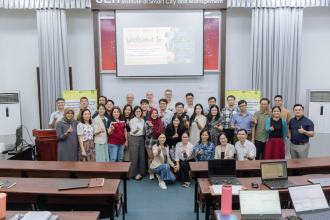
Early career researchers participated in memorable summer school
Discrete Choice Experiments (DCE) was the topic when the University of Economics Ho Chi Minh City (UEH), the Economy and Environment Partnership for Southeast Asia (EEPSEA), and the Environment for…
|
Experiments |
Vietnam

Online course in Benefit-Cost Analysis: Valuing Life and Health
Harvard T.H. Chan School of Public Health is offering the Benefit-Cost Analysis: Valuing Life and Health program on September 16-20, 2024. In this online course, Lisa A. Robinson, a leading Harvard…
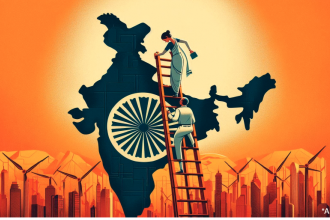
India’s development requires Nari Shakti (women’s empowerment)
India’s newly formed government aims to make the country Vixit (developed) by 2047. This calls for improving India’s gender parity in socio-economic outcomes, according to Farzana Afridi (Professor of Economics at Indian Statistical Institute, Delhi). She pens key policies that can propel the country in this direction in an op-ed article in the India Express.