| Vietnam

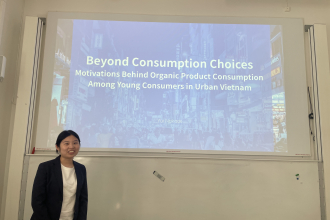
She thought tradition would explain organic buying in Vietnam. Family trust did.

When Yui Nakade, a master's student at Lund University in Sweden, arrived at Ho Chi Minh City by video call in early 2026, she was trying to answer a simple question: why are young Vietnamese consumers becoming interested in organic products? Her working theory was that traditional values, passed down through generations, would explain it. Her fieldwork, carried out with the support of EfD Vietnam's student network, told a different story: health and family trust matter far more than tradition, and many young people know less about organic products than she expected.
| Agriculture, Climate Change, Gender | Nigeria

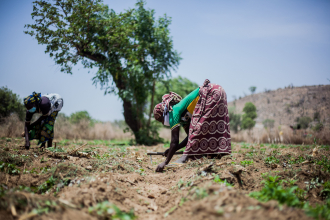
Why empowering women can contribute significantly to achieving sustainable agriculture

As climate change intensifies across the globe, its effects on agriculture are becoming increasingly evident through rising temperatures, erratic rainfall patterns, floods, droughts, land degradation, biodiversity loss, and declining agricultural productivity. These environmental challenges threaten not only food production but also the sustainability of agricultural systems and the livelihoods of millions of rural households.

| Policy Design, Waste | Global Hub

Space trash: Orbit shows where the circular economy breaks down

A circular economy is one in which products do not end up as waste but are instead repaired, reused, or transformed into new materials. This stands in contrast to the linear economy currently dominant worldwide—one built on extraction, production, use, and disposal. Despite the growing recognition of circularity as a sustainability necessity and the implementation of many circular economy initiatives worldwide, very few systems are truly circular in practice.

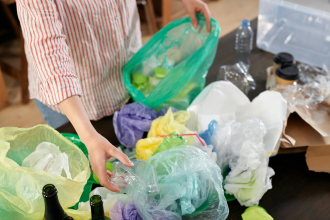
From basic needs to basic waste: Unpacking plastic mismanagement

In late 2025, major global food and consumer goods producers—including PepsiCo, Nestlé, Coca-Cola, Procter & Gamble, and Unilever —met in Europe to discuss the future of packaging[1]. The summit focused on new ideas to make packaging more sustainable and reduce waste. However, one important issue remains unclear: did the event incorporate the voices and concerns of countries in the Global South?

| Carbon Pricing, Climate Change, Energy | India

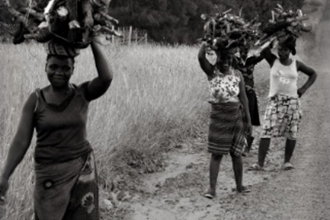
Carbon pricing could increase fuelwood consumption and women’s collection time in Malawi

New research shows electricity price hikes in Malawi increase firewood use and women's and girls’ domestic burden. To balance the burden for households, parts of the tax revenue could be recycled. Economists usually propose lump-sum transfers, while people often prefer green investments or targeted transfers. This study - taking household bargaining power into account - emphasizes the possibility of handing out transfers to women, which would also increase their intra-household bargaining power and reduce firewood consumption.

| Agriculture, Energy, Policy Design | Uganda

Clean energy solutions for agriculture: Empowering MSMEs in Sub-Saharan Africa

In the face of climate change and its disproportionate impact on agriculture, finding sustainable solutions for smallholder farmers is more critical than ever. With agriculture being the backbone of many Sub-Saharan African economies, adopting low-carbon technologies in this sector offers immense potential to drive inclusive economic growth while ensuring environmental sustainability.

| Energy, Gender, Policy Design | India

Does electrification illuminate women's lives?

A key reason for women’s low labour force participation in developing countries is the burden of unpaid domestic work. Analysing data from rural Bangladesh, this article assesses whether electrification can make a difference by increasing access to time-saving technologies. It finds that women in electrified homes are able to divert some time away from housework to farm work and leisure, and have a greater say in decision-making.

This is the third post of a five-part series to mark International Women’s Day 2025.