As climate change intensifies across the globe, its effects on agriculture are becoming increasingly evident through rising temperatures, erratic rainfall patterns, floods, droughts, land degradation, biodiversity loss, and declining agricultural productivity. These environmental challenges threaten not only food production but also the sustainability of agricultural systems and the livelihoods of millions of rural households.
Building resilient and sustainable production systems, therefore, requires a deeper understanding of how farmers perceive climate risks and how those perceptions influence their adaptation decisions. Importantly, these perceptions are often shaped by gender roles, responsibilities, and access to resources within households.
In many developing countries, including Nigeria, agriculture remains highly climate-sensitive. Farmers are increasingly adopting adaptation measures such as mulching, multiple cropping, crop diversification, soil and water conservation practices, agroforestry, and climate-smart farming techniques to reduce vulnerability to environmental shocks.
While these adaptation practices are widely recognised for improving resilience, their contribution extends beyond climate adaptation. They also support sustainable production by enhancing soil health, improving water-use efficiency, conserving biodiversity, reducing environmental degradation, and promoting long-term agricultural productivity.
Women are more climate-sensitive
However, the decision to adopt these practices is not gender-neutral. Research has consistently shown that men and women often perceive climate change differently due to their distinct roles in agricultural production, household management, and natural resource use (Ngigi et al., 2017; Ginbo and Hansson, 2023).
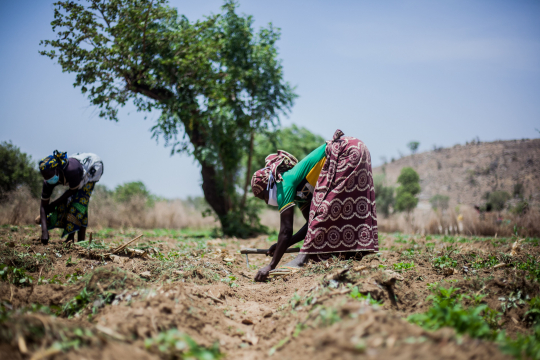
Women, who frequently bear primary responsibility for food provisioning, household nutrition, water collection, and subsistence farming activities, tend to experience the impacts of climate variability more directly. Consequently, they often demonstrate greater sensitivity to climate risks and a stronger inclination toward adopting practices that safeguard household food security and environmental resources.
Men, on the other hand, may place greater emphasis on immediate economic returns and production outcomes, leading to different adaptation priorities.
Increased adoption of climate-smart practises
Evidence from a recent study conducted in Anambra State, Nigeria (See Anugwa et al., 2026), highlights the significance of these gendered perceptions in shaping sustainable agricultural practices. The study found that wives’ perceptions of climate change significantly influenced the adoption of environmentally sustainable adaptation measures such as mulching, early planting, and multiple cropping.
These practices are widely recognised as critical components of climate-smart and sustainable agriculture because they improve soil fertility, enhance moisture retention, reduce erosion, optimise resource use, and strengthen ecosystem resilience.
Similar findings have been reported in Ghana and other African countries, where women’s heightened awareness of climate risks has been associated with increased adoption of adaptation measures that contribute to both household resilience and environmental sustainability (Adzawla et al., 2019; Bessah et al., 2021).
More environmental benefits
The implications of these findings are particularly important within the broader discourse on sustainable consumption and production. Sustainable production requires farming systems that not only increase yields but also preserve natural resources, reduce environmental footprints, and maintain ecological integrity for future generations.
Women’s greater propensity to adopt conservation-oriented agricultural practices suggests that empowering women can contribute significantly to achieving sustainable production goals. Their role as managers of household food systems and natural resources positions them as critical actors in advancing environmentally responsible agricultural development.
Inequalites must be addressed
Nevertheless, translating climate awareness into sustainable production outcomes depends heavily on access to resources and opportunities.
Women farmers often face structural barriers, including limited access to land, credit, extension services, agricultural inputs, and climate information. These constraints can restrict their ability to invest in adaptation practices, even when they possess strong awareness of climate risks.
Conversely, men frequently enjoy greater access to productive resources, enabling them to adopt innovations more readily. Addressing these inequalities is therefore essential for accelerating the transition toward sustainable and climate-resilient agricultural systems.
Networks play an important role
Social capital also plays a crucial role in supporting sustainable production. Membership in farmer organisations, cooperatives, and community groups facilitates access to climate information, technical knowledge, markets, and collective action opportunities. Such networks enable farmers to learn about sustainable farming practices, share experiences, and mobilise resources for adaptation.
Yet women remain underrepresented in many of these groups, limiting their access to valuable knowledge and support systems. Strengthening women’s participation in social and producer networks can enhance the diffusion of climate-smart innovations and foster more inclusive pathways toward sustainable production.
Extension services can drive change
Agricultural extension systems are equally important in driving sustainable transformation. Effective extension services serve as a bridge between research and practice, helping farmers adopt technologies and management practices that improve productivity while protecting environmental resources.
However, extension programmes often fail to adequately reach women farmers, reinforcing existing inequalities in access to information and innovation. Gender-responsive extension approaches that recognise women's specific needs, schedules, and production roles can significantly enhance the adoption of climate-smart and environmentally sustainable practices.
Several policy implications
From a policy perspective, these findings underscore the need to integrate gender considerations into climate adaptation, environmental sustainability, and sustainable production strategies. Policies that overlook intra-household gender dynamics risk missing critical opportunities to strengthen resilience and accelerate sustainable agricultural transformation.
Governments, development partners, and research institutions should therefore promote interventions that improve adaptation literacy, strengthen access to climate information, expand women's access to productive resources, and support inclusive decision-making processes within households and communities.
Gender perspectives can unlock great opportunities
More broadly, empowering women within agricultural systems represents both a sustainability imperative and a development opportunity. When women are equipped with the knowledge, resources, and institutional support needed to respond to climate change, agricultural systems become more resilient, food security improves, environmental resources are better managed, and communities become better prepared to withstand future shocks.
Gender-responsive adaptation strategies can therefore generate multiple benefits, contributing simultaneously to climate resilience, sustainable production, environmental conservation, and rural development.
As countries pursue the Sustainable Development Goals and global commitments on gender equality (SDG 5), responsible consumption and production (SDG 12) and climate action (SDG 13), recognising the role of gendered climate perceptions becomes increasingly important.
Sustainable agricultural transformation will require not only technological innovation but also social and institutional changes that enable both women and men to participate fully in shaping resilient food systems. By integrating gender perspectives into climate adaptation and environmental policies, stakeholders can unlock new opportunities for sustainable production while building a more equitable and climate-resilient future.
References
Adzawla, W., Azumah, S., Anani, P. & Donkoh, S. A. (2019). Gender perspectives of climate change adaptation in two selected districts of Ghana. Heliyon, 5:e02854. doi: 10.1016/j.heliyon.2019.e02854,
Anugwa, I.Q., Agwu, A.E., Amadu, F., Ume, C.E, & Ngidi, M. (2026). Intrahousehold gender difference in climate change perception and agricultural adaptation: Evidence from Anambra State, Nigeria. Frontiers in Sustainable Food Systems. 10:1851078
Ginbo,T., & Hansson, H. (2023). Intra-household risk perceptions and climate change adaptation in sub-Saharan Africa. European Review of Agricultural Economics, 50:jnad011. doi: 10.1093/erae/jbad011
Ngigi, M.W., Mueller, U., & Birner R. (2017). Gender differences in climate change adaptation strategies and participation in group-based approaches: an intra-household analysis from rural Kenya. Ecological Economics, 138, 99–108. doi: 10.1016/j.ecolecon.2017.03.019