
New research shows electricity price hikes in Malawi increase firewood use and women's and girls’ domestic burden. To balance the burden for households, parts of the tax revenue could be recycled. Economists usually propose lump-sum transfers, while people often prefer green investments or targeted transfers. This study - taking household bargaining power into account - emphasizes the possibility of handing out transfers to women, which would also increase their intra-household bargaining power and reduce firewood consumption.
Carbon pricing is proposed as an efficient policy to lower emissions in the fight against climate change. However, rising energy costs may have unforeseen repercussions in low-income countries like Malawi, where the majority of people consume firewood for cooking.
In order to better understand how Malawian households react to fluctuations in energy prices, researchers from the Indian Statistical Institute, Delhi, and the Potsdam Institute for Climate Impact Research, Germany, analysed data spanning more than ten years, from 2010 to 2020. During this period, Malawi exhibited a near tenfold increase in electricity prices - from MK 7 to MK 65 per kilowatt hour. The findings suggest that a 1% increase in electricity prices resulted in a 2.6%-3.8% increase in firewood use across Malawi and a 4.3% increase in wood consumption in urban areas.
More firewood, less time for education and work
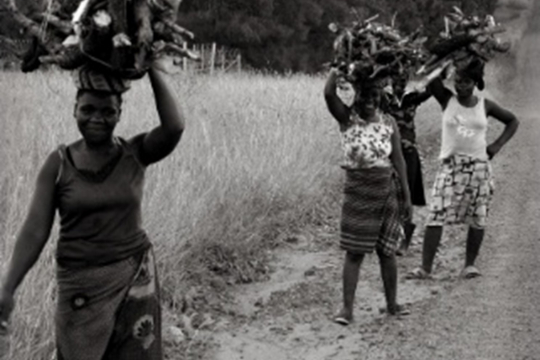
This transition is more than just a change in the type of fuel; it incurs significant social consequences. In Malawi, as in many regions of sub-Saharan Africa, the responsibility of collecting firewood falls mainly on women and girls. When households revert to using firewood, the amount of time spent gathering fuel increases. The research indicates that a 1% increase in electricity prices corresponds to a 1.5% rise in the time spent by women on firewood collection and a 0.8% increase in girls’ collection time.
These activities take away time from education, paid work and relaxation. Furthermore, the study results show that rising electricity prices lead to a decrease in both formal and informal work hours, especially among children. An increase of 1% in electricity prices is associated with a 2% reduction in working hours for both boys and girls, and a significant 44–47% decline in the probability of children being literate in any language.
The results indicate a concerning trend: escalating electricity prices are forcing families to step down the energy ladder. Rather than transitioning to cleaner, modern fuels, numerous households are reverting to traditional biomass like firewood and charcoal, which hinders the country’s goal towards universal access to clean energy. This shift not only heightens indoor air pollution and contributes to deforestation but also exacerbates gender inequality.
Improvements in women’s bargaining power make a difference
A significant insight from the study is that women’s empowerment in household decision-making is crucial to determine cooking fuel choice. In households where women participate in decisions related to spending, healthcare access, or visiting family, which suggests greater autonomy for women within homes, firewood use is less pronounced in the context of rising electricity costs.
Increases in household wealth further play a mediating role in fuel consumption. The probability of consuming firewood for cooking decreases substantially as household wealth and women’s bargaining power rise in the event of electricity price hikes.
Thus, improvements in women’s bargaining power tend to ameliorate the rise in firewood use for cooking when electricity prices rise. These findings are suggestive, rather than conclusive. Further analyses and data gathered from fieldwork would be needed to identify the causal effects of women’s empowerment on fuel consumption.
Policy recommendations: Cash transfers and clean energy transitions
Policymakers can target cash transfers to women and poor households to assist families in transitioning to cleaner energy sources. Financial aid could thus mitigate the effects of increasing electricity costs, reduce the reliance on firewood, and enhance the health and education of children. When effectively designed, such initiatives would not only cut emissions but also promote gender equality and improve overall household welfare.
Malawi is not an isolated case; urban Africa sees over 80% of their population depending on biomass (charcoal) for cooking. In the Malawian countryside, nearly 90% of homes utilise firewood for cooking, while the majority still find electricity inaccessible.
While carbon pricing can benefit the environment, this study emphasizes a crucial point: climate policies should not negatively impact the most disadvantaged. Thus, we require carefully crafted strategies - such as gender-sensitive cash transfers or employment programs for women - to achieve an equitable energy transition and make progress towards gender equality.
Reference:
Aggarwal, R. and Steckel, J. C. Electricity price hikes raise firewood consumption and women's collection time in Malawi. Environmental Research: Energy, 2 025014. Link