Are land values related to ambient air pollution levels? Hedonic evidence from Mexico City

Submitted by Petra Hansson on
EfD Authors:

AbstractThis article investigates whether residents of Mexico City value air quality. Our results suggest that air quality improvement in PM10 is equivalent to a marginal willingness to pay (MWTP) of US$440.31 per property for the period 2006–2013. The corresponding MWTP for PM2.5 is US$880.63, for O3 is US$623.78, and for SO2 is as much as US$2091.50. These estimates are considerably larger in magnitude compared to the few other studies in similar settings.

Air Quality

Air pollution exposure and COVID-19: A look at mortality in Mexico City using individual-level data

Submitted by Petra Hansson on

Highlights

  • We find evidence that air pollution (PM2.5) increases the probability of dying from COVID-19
  • This effect is most likely driven by long-term exposure
  • Results are robust to controlling for individuals’ characteristics (including age and comorbidities)
  • The effect is increasing with age, especially within the population that is 40 years or older

Abstract

Air Quality, Covid-19

The use of plastic as a household fuel among the urban poor in the Global South

Submitted by Petra Hansson on

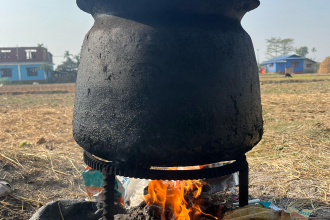
Increasing plastic waste pollution has led to a rising prevalence of the open burning of plastic waste, especially in locations lacking formal waste management systems. Urban slum communities face particularly acute challenges in accessing both organized waste-collection services and low-cost traditional energy sources, and clean cooking-fuel alternatives tend to be unaffordable for their low-income residents. Here we examine the potential risk these unseen communities face and describe the need for a new research agenda to better understand and quantify the scope of the problem.

Air Quality, Climate Change, Energy, Health, Waste

Carbon Monoxide Exposure and Risk of Cognitive Impairment Among Cooks in Africa

Submitted by Manuela Fonseca on
EfD Authors:

We use air pollution exposure measurements and household survey data from four studies conducted across three countries in sub‐Saharan Africa (SSA) to analyze the association between carbon monoxide (CO) exposure from cooking with biomass and indicators of cognitive impairment. While there is strong evidence on the relationship between ambient air pollution exposure and cognitive impairment from studies in high‐income countries, relatively little research has focused on household air pollution (HAP) in low‐income country settings where risks of HAP exposure are high.

Air Quality