Sustainable fisheries and aquaculture management
Overfishing and depleted fish stocks are the results of open-access conditions where an individual fisher is acting in line with what is best for her personally. However, the joint outcome of all

Overfishing and depleted fish stocks are the results of open-access conditions where an individual fisher is acting in line with what is best for her personally. However, the joint outcome of all
Following the data collection process for the Fishery Performance Indicators, researchers at The Resource and Environmental Policy Research Centre, Environment for Development (REPRC-EfD) Nigeria
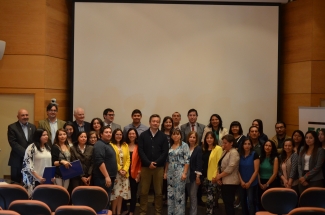
The project focused on evaluating the direct and indirect effects of an educational program on students’ and parents’ knowledge, attitudes, and practices (KAP) regarding consumption and disposal of
Command and control instruments, such as Plastic-bag bans, have been effective in countries with a strong enforcement mechanism. In developing countries, these instruments have been partially
This paper aims at evaluating the direct and indirect effects of an educational program on students’ and parents’ knowledge, attitudes, and practices (KAP) regarding the consumption and disposal of
This article examines the collective bargaining efforts of atomized fishermen with a monopsony-like buying sector. Government allocation of collective share quotas to fishermen’s organizations triggered the voluntary formation of cooperative fishermen’s bargaining associations, while a highly concentrated processing sector started behaving as a countervailing monopsony. This drove ex-vessel price determination into region-specific bilateral monopoly price bargaining.
Ocean acidification (OA) is one of the largest emerging and significant environmental threats for the aquaculture industry, jeopardizing its role as an alternative for supporting food security. Moreover, market conditions, characterized by price volatility and low value-added products, could exacerbate the industry's vulnerability to OA.
There is greatly growing attention to tackling plastic pollution issues. Previous studies proposed various instruments dealing with plastic problems. Education and information programs are frequently
The polluting of marine ecosystems with plastics is both a global and a local problem with potentially severe consequences for wildlife, economic activity, and human health. It is a problem that originates in countries’ inability to adequately manage the growing flow of waste. We use an impact pathway framework to trace the flow of plastics through the socio-ecological system and identify the role of specific policy instruments in achieving behavioral changes to reduce marine plastic waste. We produce a toolbox for finding a policy that is suitable for different countries.