October's newsletter is out!
Check your mailbox! (Check the spam filter too!) If you haven't subscribed yet, just fill in your e-mail address in the subscribe box at the bottom of this page, so you don't miss any news from us…
Transformation towards an inclusive green economy is one of the prerequisites for achieving the sustainable development goals in Agenda 2030.
AbstractPolicymakers frequently voice concerns that carbon pricing could impair economic development in the short run, especially in low-income countries such as Uganda. Using a consumer demand system for energy and food items, we assess how households’ welfare, and demand for food and energy, would respond to a carbon price of USD40/tCO2. We find welfare losses of 0.2–12 per cent of household expenditure on food and fuel, due to the carbon price. Average demand for electricity and kerosene decline by 11 and 20 per cent respectively, while firewood demand rises by 10 per cent on average.
Carbon pricing is an important instrument. In the Global South, however there is a risk of malnutrition and deforestation if poor people are not compensated. A new study by EfD and MCC researchers…
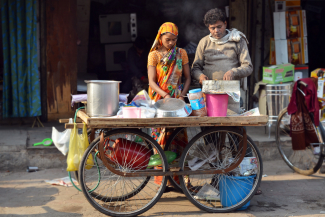
Every winter, New Delhi and much of Northern India are shrouded in a thick layer of smoke due to farmers burning crop residue. The resulting pollution impacts over 400 million people exposing them to…
To download the job description (in Swedish only) please click here!
EfD’s global network Women in Environmental Economics for Development (WinEED) has sustained its effort to encourage women to take leadership positions in research and development. Women researchers…
EfD Kenya organized a policy workshop on October 2nd in Nairobi, which brought together researchers, civil servants, and stakeholders from the energy, transport, and industrial sectors. The event…