A cautious approach to subsidies for environmental sustainability
EfD Authors:
Transformational change is possible, but design and implementation must seek to avoid lock-in

Transformational change is possible, but design and implementation must seek to avoid lock-in
Abstract
This study evaluates Kenya’s policy, legal, and institutional frameworks for managing the environmental, social, and
Occupational Safety and Health (OSH) impacts of gold cyanidation, focusing on Siaya County. Despite the robust national
policies and legal structures, such as the National Environment Policy, 2013 and the Mining Act, 2016, effectiveness is
compromised by enforcement gaps and insufficient institutional resources. The Siaya County Integrated Development
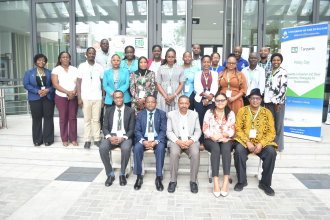
The EfD Tanzania held its much-anticipated Policy Day on January 13, 2025, at the University of Dar es Salaam. Under the theme Towards a Greener and Bluer Economy: Strategies for Sustainability , the…
The main aim of this paper is to analyze the different impacts of carbon taxation inMexican households at different income levels. First, we estimate a household demandsystem for non-durable goods with special emphasis on energy-related goods. Then, weuse the results to simulate the introduction of a carbon tax. We look at the potential toraise revenue with the aim of implementing different redistributive policies in order toaddress issues of inequality and poverty. Moreover, we evaluate the effects of carbontaxes on demand and emissions reduction.

Experts met to discuss how heavy industry can support the country’s industrialization and modernization efforts at a recent workshop organized by Vietnam’s Central Economic Commission. Dr. Le Thanh…
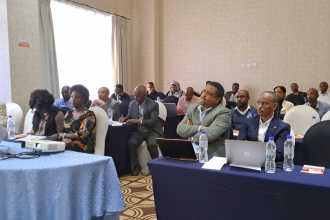
EfD Ethiopia hosted a workshop on January 16 with senior civil servants, policymakers, researchers, and NGO experts to discuss energy efficiency and reduced emissions to ensure a sustainable energy…
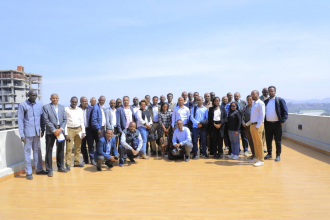
A workshop was organized on January 15 to validate Ethiopia’s clean cooking roadmap 2025-2035, developed by the Ministry of Water and Energy (MoWE). Experts from ministries, regional and city…
Land tenure security (LTS) is important for achieving many sustainable development goals but its influence on forest cover is mixed. The uncertain relationship between LTS and forests is driven, in part, by the moderating influence of other drivers of deforestation. In this paper we illustrate this complex relationship between LTS and forest cover for individual private landholders in the Colombian Amazon. We use household surveys and econometric analysis with matching techniques to examine whether formal land titles and perceptions of LTS influence forest cover.

The next EEU seminar will be held on Monday the 10th of February at 12:10 – 13:15 in E45. The seminar will be held by Knut Einar Rosendahl and he will be presenting a paper on the topic of: Combining…
This study evaluates the Vietnamese shrimp farming industry through a Triple Bottom Line (TBL) perspective, using the Aquaculture Performance Indicators (API) to assess social, economic, and environmental performance. Over the past 25 years, Vietnamese shrimp farming has grown rapidly and diversified into four systems: Extensive, Semi-intensive, Intensive, and Super-intensive, and data is collected for all these systems.