Vulnerability to climate change and the variations in factors affecting farmers’ adaptation: A multi-group structural equation modelling study

Submitted by Luat Do on
EfD Authors:

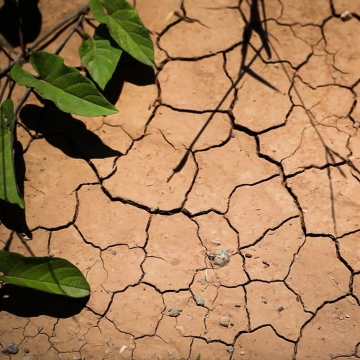
This study investigates how factors that influence farmers’ intentions to adapt to climate change differ from each other in regions with different levels of vulnerability to climate change. Data were collected from interviews with 598 rice farmers in Dong Thap, Soc Trang and Long An provinces in the Mekong Delta, Vietnam. These provinces were identified respectively as highly, moderately and mildly vulnerable to climate change. Multi-group structural equation modelling was employed.


Agriculture, Climate Change

South-East Asian ricardian studies: Bangladesh, Sri Lanka, Thailand, and Vietnam

Submitted by Luat Do on
EfD Authors:

Bangladesh, Sri Lanka, Thailand, and Vietnam each conducted a Ricardian analysis of crop net revenue (NR) in their country. The countries defined seasons slightly differently depending on their monsoon and dry periods. They also sometimes included slightly different variables in their regressions. The countries are small so that the climate results are often insignificant. However, the Ricardian model does predict near term damage in Bangladesh in the CanESM climate scenario and near and far term damage in Thailand in the CMCC climate scenario.

Agriculture, Climate Change

Willingness to pay for agricultural flood insurance in the Mekong River Delta

Submitted by Luat Do on

Increasing urbanization and industrial development upstream of the Mekong River Delta of Vietnam (MRD) including the construction of a series of dams for hydroelectricity generation is changing the downstream risk of flooding. Concerns about the likely influence of global climate change and rising sea levels add further uncertainty to this risk that threatens the livelihood of farmers.

Agriculture, Climate Change, Experiments

Household investment behavior toward urban flooding adaptation in Ho Chi Minh City

Submitted by Luat Do on
EfD Authors:

An investigation about the adaptive capacity of residents in Ho Chi Minh City when facing the flooding problems which have frequently happened in recent years. Although the government has spent a lot of money in the drainage system, and the situation has been reported to be better, a high proportion of surveyed people said that the improvement is just local; however, the whole city still needs more effort to control flooding. Households living closely to frequently flood-prone usually consider two main measures to protect themselves from the flood: Floor elevation or dry-proof investment.

Climate Change, Policy Design

Factors influencing the adaptation of farmers in response to climate change: a review

Submitted by Luat Do on
EfD Authors:

This paper aims to review empirical studies regarding factors influencing farmers’ adaptation to climate change and document those factors in a systematic manner. Adaptation to climate change is an important research topic, especially in agriculture, a sector reliant on climate-sensitive resources. Several studies have examined the adaptation issues and identified factors that influence the adaptive responses of farmers in specific contexts or regions. However, little research effort has been paid to collecting and categorizing those factors.

Agriculture, Climate Change

Assessing the value of coral reefs in the face of climate change: The evidence from Nha Trang Bay, Vietnam

Submitted by Luat Do on
EfD Authors:

Coral reef ecosystems provide many important services to society. Their importance is not only proved by their beauty but also because they provide food and livelihood for millions of people in communities around the world, especially in developing countries. This paper estimates the economic value of coral ecosystems and potential impacts of climate change and fishing activities on the loss of coral reefs in Nha Trang Bay, Vietnam.

Biodiversity, Climate Change, Conservation

Risk communication, women’s participation and flood mitigation in Vietnam: An experimental study

Submitted by Luat Do on
EfD Authors:

Flood risk management has become important more than ever, because an escalating threat of unpredictable and extreme weather is affecting flood-prone communities. People-centred risk communication has been proposed as an effective strategy that can stimulate people to protect themselves against flood risks. However, little research with a sound theoretical underpinning has been done to examine the effectiveness of such a strategy in developing countries. We use a field experiment to analyse how risk communication can influence households’ intentions to implement mitigation measures.

Climate Change, Experiments, Gender