EfD-MaK Policy Brief on Changes in Lake Victoria's Hydrology, Water Quality and Livelihoods
KEY MESSAGES
Lake Victoria Basin is facing a number of challenges:
KEY MESSAGES
Lake Victoria Basin is facing a number of challenges:
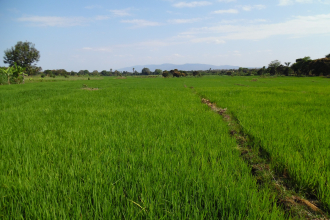
EfD researchers have studied the effects of a method of rice cultivation that can increase crop productivity and requires less water and fewer seeds. The study took place in Kilombero, a major rice…
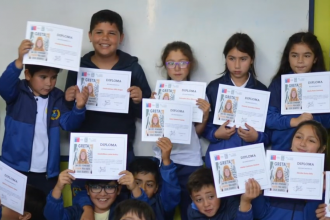
Chile EfD researchers Marcela Jaime and César Salazar in cooperation with the Chilean Ministry of Environment designed and implemented an environmental education program on marine plastic pollution…
The social and economic effects of the COVID-19 pandemic and the measures to contain it in Latin America could lead to a series of long run consequences that could impact the region’s achievement of the Sustainable Development Goals (SDG). This article is the result of the collaboration of environmental economists from eight of the region’s countries and it discusses the possible pandemic effects on air pollution, deforestation, and other relevant environmental aspects related to the SDG.
Effective climate adaptation in sub-Saharan African agriculture will require coordination across multiple scales of governance. Decision-makers from local to national scales will be tasked with planning under conditions of high uncertainty, often with minimal data. Participatory scenario planning is a method for devising adaptation strategies under high uncertainty, and we hypothesized that it could also be used for identifying systemic, inclusive, and transformative adaptation options at the community scale, and for highlighting opportunities for cross-scalar collaboration.
The 2020 Annual Conference of the Economy & Environment Partnership for Southeast Asia (EEPSEA) will be partial-virtually organized between December 09 and 11 in 2020 to discuss about…
Abstract
The production of charcoal to meet cooking needs of urban households is one of the main causes of deforestation and degradation of Africa’s tropical forests, which offer significant carbon sequestration capacity to the global economy.
In collaboration with a reputable local micro-finance institution, we designed a randomized controlled trial in urban Tanzania and offered LPG stoves through subsidy and on credit to measure their impact on charcoal consumption and the corresponding reduction in deforestation.
The purpose of this paper is to examine the beef value chain and identify climate change adaptation and investment options in the semi-arid areas of northern Kenya. The research uses an innovative approach to value chain analysis, namely the three-step Value Chain Analysis for Resilience in Drylands (VC-ARID) that considers the specific characteristics of semi-arid systems.