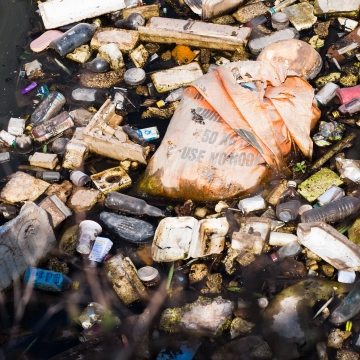
Assessing service quality of e-waste recycling: A case study from Putrajaya, Malaysia
EfD Authors:
The quality of recycling services will reflect the effectiveness of recycling performancefurther improvements. Putrajaya residents were selected as a study site to evaluate the recycling services and assess the ability of the services provided. Data were collected using a stratified random sampling of the householdsusing the questionnaires that have been prior tested for reliability. Thecritical incident technique (CIT) was used to identify and analyse the satisfaction and dissatisfaction of recycling services.
Examining the Attributes of Electronic Waste Recycling Service: A Choice Modelling Approach
EfD Authors:
This paper estimates the economic valuation, discusses preferences for electronic waste (e-waste) recycling, and identifies the most preferred attributes in e-waste recycling. Stratified random sampling from the households in Putrajaya, Malaysia was utilised to obtain the primary data. It provides the readers with an intrinsic satisfaction when choosing a modelling analysis on the valuation of non-market goods using conditional logit simple model.
Solid waste management during Covid-19 pandemic: policy gaps and prospects for inclusive waste governance in Nigeria

EfD Authors:
Solid waste management (SWM) is a public health service whose importance is often understated. When the solid waste management challenge is exacerbated by a public health emergency such as the Covid-19 pandemic, its real significance as an essential service becomes more apparent. The outbreak and spread of the novel coronavirus (Covid-19) has led to dramatic transformations of every sector of the Nigerian society including SWM systems, where formal and informal actors co-exist often in an uneasy relationship.
Assessing social acceptability and welfare effects of policy instruments to reduce marine plastic pollution: a multi country choice experiment
The objective of this study, which is starting in 2020, is to contribute to the design of policies to reduce marine plastic pollution, by assessing the preferences of households and the welfare

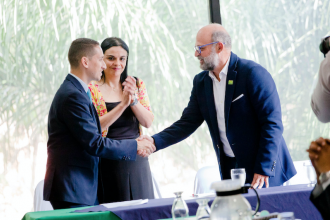
Turrialba will be a model in waste management through the circular economy
The project will be executed by CATIE and the Municipality of Turrialba. MINAE will accompany the implementation December 5, 2019.Last Thursday, December 5, the Municipality of Turrialba and the…
Encouraging urban households to segregate the waste they generate: Insights from a field experiment in Delhi, India
EfD Authors:
Despite the Solid Waste Management Rules (SWM), 2016 stating that waste generators should segregate their waste before it is collected; most households in Delhi continue to be non-compliant. We conduct a study in 15 localities of Delhi to understand whether information, norms and economic incentive would have an effect on households’ compliance to rules. The study uses field experiments to elicit the impact of the interventions.
Policy Dialogue with Mukono District Leadership
Environmental Economists from the Environment for Development-Makerere University (EfD-Mak) Centre on 20th February 2020 conducted a policy tour of Mukono District Local Government headquarters where
Environmental economists Conduct Policy Tour to Wakiso district
Environmentalist and economists from Environment for Development Initiative (EfD– Mak Centre) set out from the Ivory Tower to Wakiso district headquarters to dialogue with the councilors on the