EfD-MaK Policy Brief on Changes in Lake Victoria's Hydrology, Water Quality and Livelihoods
KEY MESSAGES
Lake Victoria Basin is facing a number of challenges:
KEY MESSAGES
Lake Victoria Basin is facing a number of challenges:
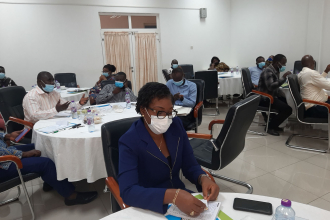
A round table discussion on the theme “Managing Plastic Waste in Ghana” was held 3rd December at the GIMPA Executive Conference Centre, Accra. It featured a presentation from ENRRI fellow Dr Kwami…
The 2020 Annual Conference of the Economy & Environment Partnership for Southeast Asia (EEPSEA) will be partial-virtually organized between December 09 and 11 in 2020 to discuss about…
We examine whether the adoption of global voluntary environmental management systems - United Nations Global Compact and ISO 14001 - lead to more effective environmental performance. Previous studies have presented inconclusive findings of voluntary environmental management systems on environmental performances. Possible reasons for conflicting results are the influence of observable and unobservable factors that affect environmental performance as well as the use of different measures of environmental performance indicators.
Municipal solid waste management is a challenging issue in developing countries. An unclean neighborhood could have a significant negative impact on housing property values too as it may lead to numerous diseases in addition to diminished aesthetic value. This study examines the effects of municipal solid waste collection services at the neighborhood level on housing property values using the hedonic price model. We use a sub-sample of nationally representative household survey data from urban areas as well as primary data collected from one of the metropolitan cities in Nepal.
Over 40 trainees including representatives from Uganda line Ministries, Departments and Agencies including the Ministry of Lands and Housing, the Ministry of Water and Environment, the National Forest…
The EfD Mak Centre Uganda in collaboration with EfD-Tanzania on 24th June, 2020 held a Webinar with a purpose of distilling lessons learned from the COVID-19 response and how these can be transposed…