FILTER
Displaying 31 - 40 of 315 publications
What is the economic value of coastal and marine ecosystem services? A systematic literature review.
Abstract This paper examines the economic value of marine and coastal ecosystem services by analyzing 67 studies published in scientific literature. It appraises, collects, and analyzes economic…
| Peer Reviewed | Colombia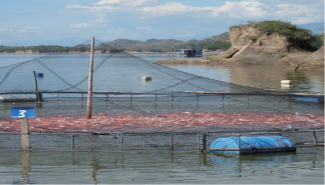
Questions: 1. Is tilapia production in Huila a sustainable endeavor from the Triple Bottom Line (Economic, Social, Environmental) perspective? 2. Are there any significant differences in…
| Research Brief | Colombia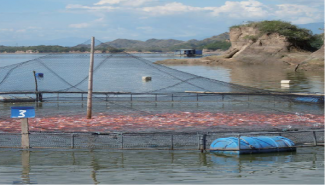
Abstract Reaching a production level of 200,000 tons (live weight) in 2022, the tilapia industry has emerged as the most important finfish farming sector in Colombia. Located in the southwest of the…
| EfD Discussion Paper | ColombiaAbstract The emergence of COVID-19 dramatically changed social behavior across societies and contexts. Here we study whether social norms also changed. Specifically, we study this question for…
| Peer Reviewed | ColombiaCoastal ecosystems and human communities are threatened worldwide by climate change, and shocks from social, market and political change. There is an urgent global need to promote resilient food…
| Peer Reviewed | Colombia, Central America and MexicoWe conducted a lab-in-the-field experiment in which 214 Colombian rural workers must choose between cash or voucher payment for completing a real effort task. Although the voucher may be perceived as…
| Peer Reviewed | ColombiaAbstract Multiple factors drive the energy transition toward power systems based on renewable energies. The use of renewable energies brings new challenges for operators since they are difficult to…
| Peer Reviewed | ColombiaKey Messages Artisanal and small-scale gold miners in remote areas of Colombia are willing to try formalization (obtaining a legal title to extract gold). However, they perceive costs can hinder the…
| Research Brief | ColombiaWe investigate the relationship between the historical dispossession of peasants’ lands by landlords that led to the rise of peasant grievances and the origin of the rural guerrilla movement –…
| Peer Reviewed | Colombia
Abstract Introduction Public perception of the seriousness of the COVID-19 pandemic compared to six other major public health problems (alcoholism and drug use, HIV/AIDS, malaria, tuberculosis, lung…
| Peer Reviewed | South Africa, India, Colombia, China, Ghana, Nigeria, Chile, Vietnam, Sweden, Ethiopia, Uganda, Tanzania, Kenya, Central America and Mexico, Global Hub