
4th Annual CECFEE Research and Policy Workshop
The Center for research on the Economics of Climate, Food, Energy and Environment (CECFEE) of the Indian Statistical Institute, New Delhi, will conduct the 4th Annual CECFEE Research and Policy…
The Center for research on the Economics of Climate, Food, Energy and Environment (CECFEE) of the Indian Statistical Institute, New Delhi, will conduct the 4th Annual CECFEE Research and Policy…
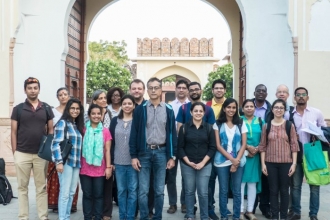
A workshop was organized by the Centre along with the Environment for Development Initiative (EFD) of the University of Gothenburg on October 15th and 16th at Ranthambhore. There were presentations…
‘The Economics of Ecosystems and Biodiversity’ (TEEB) is an initiative hosted by the United Nations Environment Programme (UN Environment), and coordinated by the TEEB Office in Geneva, Switzerland. ‘TEEB for Agriculture & Food’ (TEEBAgriFood) encompasses various research and capacity-building projects under TEEB focusing on the holistic evaluation of agriculture and food systems along their value chains and including their most significant externalities.
A significant portion of the world's forests that are eligible for Reducing Emission from Deforestation and Forest Degradation, known as REDD+, payments are community managed forests. However, there is little knowledge about preferences of households living in community managed forests for REDD+ contracts, or the opportunity costs of accepting REDD+ contracts for these communities. This paper uses a choice experiment survey of rural communities in Nepal to understand respondents' preferences toward the institutional structure of REDD+ contracts.
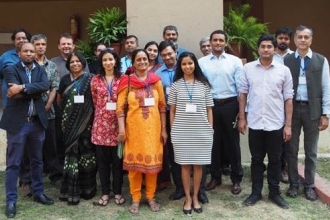
AGENDA Monday, November 2, 2015 Morning Introduction and Welcome – E. Somanathan About EfD – Gunnar Kohlin, University of Gothenburg Credit, LPG Stove Adoption and Charcoal Consumption: Evidence from…
Biodiversity conservation can alter the ecosystems and ecosystem services that are vital for human well-being. Understanding this linkage is essential for management planning to enhance the conservation and sustainable use of ecosystems and their values to human well-being.
Biomass burning of agricultural field residue (stalks and stubble) during wheat and rice harvesting periods in the Indo-Gangetic plains has led to substantial emission of trace gases and particles. This paper seeks to address the regulation of emissions from open field burning of rice residue in Punjab, India by first uncovering the factors that explain on field residue burning of rice residue in Punjab. The results suggest that the use of a combine harvester was the single most important determinant of the decision to burn rice residue.
Hotter years are associated with lower economic output in country-level data. We show that the effect of temperature on labor is an important part of the explanation. Using high-frequency micro data from selected firms in India, we find that worker productivity on hot days declines by 2 to 4 percent per degree celsius. Sustained heat also increases worker absenteeism.