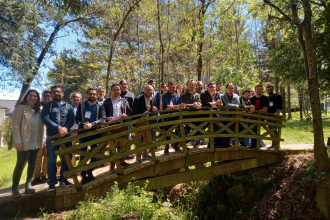
EfD Chile researchers discussed local environmental policy with politicians and other stakeholders
The Eigth Annual Meeting on Environmental Economics was marked by face-to-face attendance and included the participation of representatives from the academic, political, business, and civil society…
The pollution haven strikes back?–Evidence from air quality daily variation in the Jing-Jin-Ji region of China
EfD Authors:
Pollution havens create environmental inequality issues. China’s recent policy of directing high-pollution firms to migrate out of its capital, Beijing, offers a case of a pollution haven that was mandated, rather than resulting from firms’ responses to environmental regulation. More importantly, it leads to a question that has been less discussed in previous literature: does a pollution haven strike back?

Sustainable use of the ”blue resources” is the goal of an EfD collaborative program
Fisheries and aquaculture contribute to about 260 million jobs globally. But the oceans, lakes, and rivers are under severe pressure. Pollution, overfishing, and poor governance are serious threats to…

EfD Uganda launches two projects regarding the National Water and Forest Authorities
The Environment for Development Initiative (EfD) Makerere Centre has launched two new collaborative projects, one on improving the National Water Authority’s water bill payments and one analysis of…
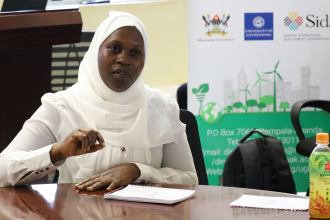
Study shows food vendors can only afford LPG cookstoves in their households
A study conducted by researchers at EfD-Mak Uganda has shown that Chapati vendors could only afford to use the Liquefied Petroleum Gas (LPG) cookstoves in their households. The study findings…
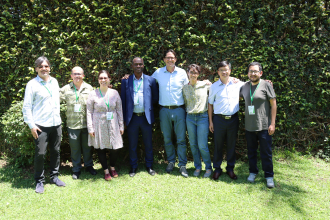
“New” collaborative program focuses on sustainable production and consumption
The CMaR collaborative program (Sustainable Management of Coastal Marine Resources) widens its scope and becomes SCOPE. The new name stands for Sustainable Consumption and Production. While CMaR…
Does legislation improvement alleviate the decoupling between welfare and wealth in China?
With an increasing decoupling trend between welfare and wealth, alleviating the decoupling trend has become a key issue on the agenda of sustainable development. This paper verifies the existence of the decoupling and examines the effects of legislation on the trend. By conducting an analysis on China's 31 provinces from 1986 to 2018, we find that legislation improvement can notably alleviate the decoupling trend.
Proceedings 2022
In this report, we provide highlights from the 16th Annual Meeting.