Rural Latin America: Scaling up climate resilience
Can climate adaptation take root in public planning, local finance, and community action simultaneously? Across three Latin American countries, a program is showing that ecosystem-based adaptation can move from concept to practice—creating lasting benefits for rural people and landscapes.
The Scaling-up Ecosystem-based Adaptation Measures in Rural Latin America (EbA LAC) program has worked from 2020 to 2025 to turn that vision into practice in Costa Rica, Guatemala, and Ecuador. By linking governments, financial institutions, indigenous organizations, and rural communities, the EfD Central America and Mexico (EfD CAM) program has shown how ecosystem-based adaptation measures can strengthen climate resilience while improving planning, finance, and livelihoods.
EbA LAC builds on scientific evidence from earlier research, including the CASCADE project, which demonstrated that ecosystem-based approaches can help vulnerable smallholder farmers adapt to climate change. As a key initiative of EfD CAM, EbA LAC applies these insights and expands them in new settings. EfD researchers active in this program are Dr. Arlene López-Sampson and Eduardo Pacay.
From evidence to action on the ground
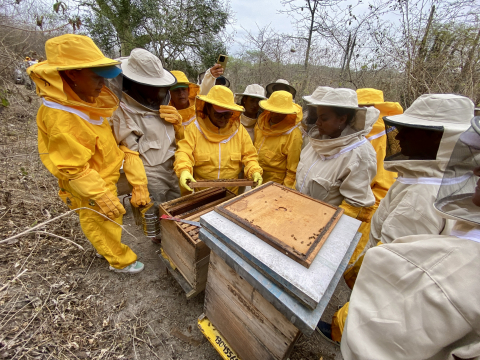
The program has also delivered measurable results in rural landscapes and communities. EbA LAC improved conservation and sustainable management in more than 15,000 hectares of priority landscapes and directly supported more than 22,000 people in adapting to climate change.
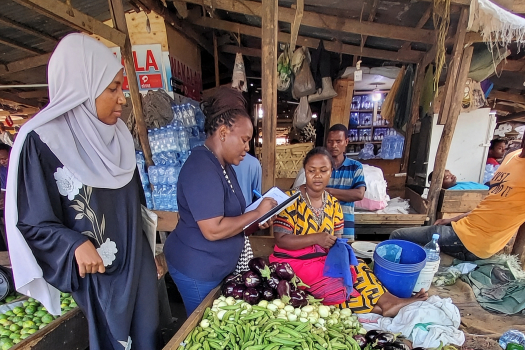
EbA LAC also provides seed funding and technical support for ecosystem-based adaptation actions. With this support, small rural producers have improved their infrastructure, developed composting systems, reduced their use of agrochemicals, and explored tourism potential.
Capacity building has been another major pillar. More than 2,200 people, including rural producers, community leaders, and institutional actors, strengthened their skills through training, networks, and technical processes. A regional e-learning course helped professionals from the financial and insurance sectors design climate-resilient financial instruments, while a training-of- trainers course equipped professionals from local governments, conservation areas, and rural development agencies to scale EbA in their territories.
Mobilizing finance for resilience
EbA LAC also showed that scaling adaptation requires financing, not only technical knowledge. To date, the program has trained financial institutions and helped catalyze more than EUR 3.5 million in public and private capital across its interventions.
In Costa Rica, 65 entrepreneurs received seed capital, and three green credit lines were established to support climate-resilient rural enterprises. In Ecuador, more than 650 people now benefit from eight community savings banks, which strengthen financial preparedness and resilience to climate-related shocks.
“It helped us break down barriers,” said Daniel Vega, a farmer. “For rural producers like us, it’s hard to access technology and markets, but this program opened doors.”
Building a pathway beyond the project
As EbA LAC approaches the end of its implementation period, the program is consolidating evidence, partnerships, and local capacities to support long-term sustainability. Collaborative workshops and stakeholder dialogues across the region have helped identify priorities and outline roadmaps for continuing these processes beyond the life of the project. By combining scientific evidence, institutional engagement, local capacity building, and innovative finance, EbA LAC has shown that ecosystem-based adaptation is not only a viable climate strategy but also a practical pathway for rural development in Latin America.
EbA LAC is funded by Germany’s BMUV through IKI, led by GIZ, and implemented in partnership with IUCN and CATIE (host institution of EfD Central America and Mexico).
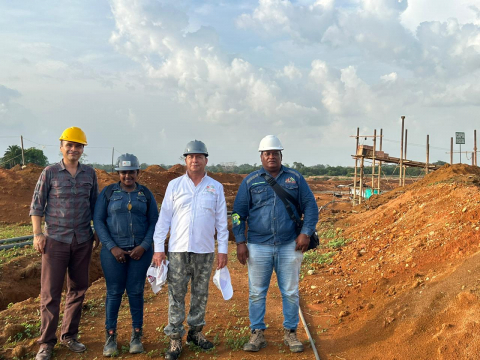
EfD researchers help lay out sustainable roadmap for colombian mining
The mining industry is vital for Colombia’s economy, but it is linked to major environmental and...

Researchers and media joined forces to raise air pollution awareness in India
In northern India, where air pollution is a growing health crisis, researchers in collaboration with...
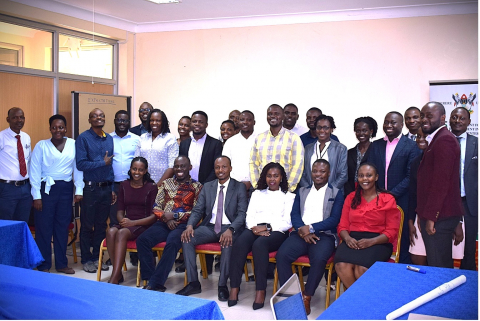
EfD Uganda helps the government integrate natural capital in economic planning
Researchers from EfD Uganda have developed the Model for Natural Capital Policy Assessment (MONCAP)...

Elevating indigenous crops in policy and practice
EfD Tanzania researcher Dr. Innocensia John has, for years, focused on indigenous crops and their...

Research helped shape China's environmental disclosure reform
In recent years, China has taken important steps to improve environmental governance. One of the...