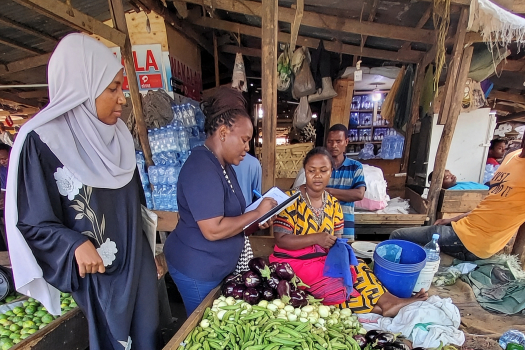
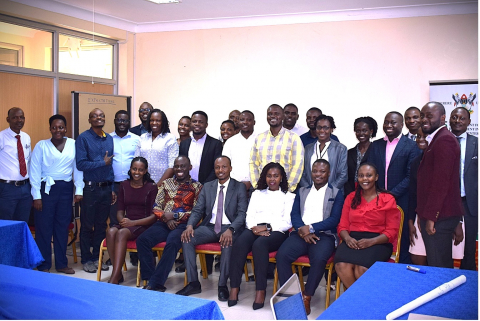
EfD Uganda helps the government integrate natural capital in economic planning
Researchers from EfD Uganda have developed the Model for Natural Capital Policy Assessment (MONCAP), an Excel-based macroeconomic tool designed to help government agencies account for forests, wetlands, biodiversity, and water resources when planning for economic growth. The model allows users to test policy scenarios and assess impacts on GDP, employment, water access, and ecological outcomes. For example, if Uganda aims for 20% GDP growth, MONCAP can estimate how much water and natural resources would be required.
The tool was created in close collaboration with the Ministry of Water and Environment, Ministry of Finance, National Planning Authority, National Forestry Authority, National Environment Management Authority, National Water and Sewerage Corporation, and the Uganda Bureau of Statistics, whose data underpin the model. This broad engagement supports more harmonized policymaking across sectors.
Expand tenfold
MONCAP arrives at a critical time. Uganda aims to expand its GDP tenfold—from USD 50 billion to 500 billion by 2040—while reducing greenhouse gas emissions by 25% by 2030. At the same time, the country faces rapid population growth and increasing climate impacts. Modeling based on UBOS data shows that wood stock declined sharply from 169 million tons in 1990 to 69 million tons in 2015, while demand rose from 17 to 49 million tons, posing risks to livelihoods and long-term economic stability.
Helps justify investments
Government officials from participating ministries received about seven days of training to use MONCAP for policy simulations and scenario analysis. Charity Kansiime, Senior Economist at the Ministry of Water and Environment, and one of the participants in the project, notes that the tool helps justify investments by showing their ripple effects across sectors such as forestry, agriculture, industry, and exports.
"I can now show what the implications of investments of, for instance, 30 billion, will have on not only forestry, but also the agricultural sector, the industry, the export sector, GNP, and so on," she says.
She also highlights broader societal benefits, such as tourism and improved climate resilience. A key success factor has been strong cross-ministry collaboration, which has built new connections and strengthened capacity for natural capital accounting. EfD Uganda researchers describe the project as both challenging and rewarding, positioning the center as a hub for macroeconomic modelling and Natural Capital Accounting (NCA) in Africa and attracting interest from potential partners and funders.
The EfD research team included Edward Bbaale, Peter Babyenda, John Sseruyange, and Nick Kilimani.
The project was funded by GIZ.
About Simulation tools
MONCAP is a SAM-based (Social Accounting Matrix) simulation tool. A SAM describes the structure of economic flows across sectors and institutions, while a CGE (Computable General Equilibrium) model additionally captures behavioral and price adjustments in response to policy change. The biggest value of a SAM lies in supporting scenario analysis, policy learning, and institutional capacity-building, rather than providing standalone causal estimates of policy effects.
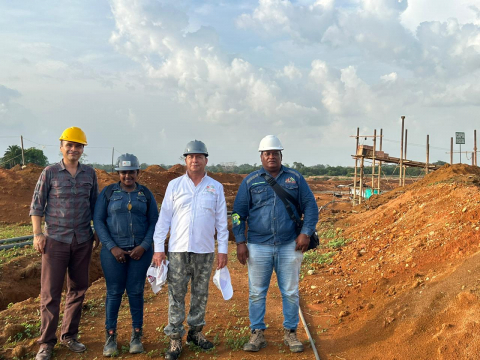
EfD researchers help lay out sustainable roadmap for colombian mining
The mining industry is vital for Colombia’s economy, but it is linked to major environmental and...
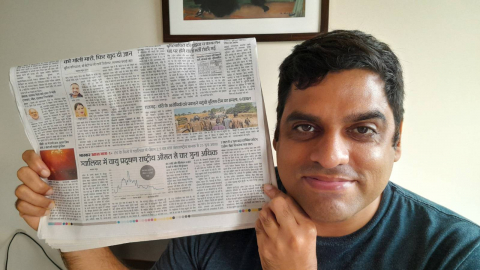
Researchers and media joined forces to raise air pollution awareness in India
In northern India, where air pollution is a growing health crisis, researchers in collaboration with...
Rural Latin America: Scaling up climate resilience
Can climate adaptation take root in public planning, local finance, and community action...

Elevating indigenous crops in policy and practice
EfD Tanzania researcher Dr. Innocensia John has, for years, focused on indigenous crops and their...

Research helped shape China's environmental disclosure reform
In recent years, China has taken important steps to improve environmental governance. One of the...