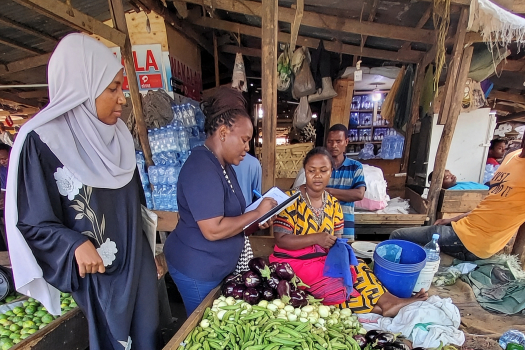

Elevating indigenous crops in policy and practice
EfD Tanzania researcher Dr. Innocensia John has, for years, focused on indigenous crops and their role in nutrition, climate adaptation, and economic empowerment for smallholder farmers. She has worked closely with policymakers, farmer groups, and other stakeholders and has received international recognition for her work. Still, several obstacles remain before indigenous crops become widely consumed.
Indigenous crops, also called orphan or neglected crops, are traditional plants consumed as part of local diets. Since the 1960s, Tanzania’s government and farmers have focused mainly on conventional crops such as coffee, cashew nuts, and maize, which often have better market potential, increasing farmers’ incomes and exports. As a result, many farmers have switched crops, and indigenous crops have partially fallen into obscurity.
However, these crops offer major benefits. Her research shows that indigenous crops support crop diversification, which improves soil health and strengthens farmers’ food security. Crops like cowpea, pigeon pea, sorghum, baobab, and cassava are resilient to climate change, tolerating wide variations in temperature and rainfall. They are also rich in essential nutrients.
“One problem is that there is very little demand. Many people are not familiar with these crops, and you don’t find them in big supermarkets,” says Innocensia John. She stresses the need for awareness campaigns to inform both producers and consumers.
From side event to center stage
Her long-term efforts — research, meetings with decision-makers, and outreach to farmers — led to her receiving the Top Agri-Food Pioneers award for her significant impact on agriculture and food systems. Her work highlights the importance of indigenous crops for food and nutrition security, climate adaptation, and agricultural diversification, offering practical advice on extension services, seed policies, and school feeding programs.
She has also raised awareness nationally. At the Annual Agricultural Policy Conference in 2023, she presented her research to hundreds of local and international participants, including ministries and NGOs.
“I felt there was a lot of interest,” she says.
When invited again the following year, she gained more opportunities to speak with ministers and even held a side-event on indigenous crops.
In 2025, indigenous fish, insects, and crops constituted one of the conference’s three main thematic areas. Professor David Nyange, Executive Director of ASPIRES (Agricultural Sector Policy and Institutional Reforms Strengthening), Tanzania, says she has significantly helped bring indigenous crops to the attention of policymakers.
After the 2025 conference, the Tanzanian Presidential Agricultural Delivery Council requested policy briefs on indigenous crops.
Sees strong potential
Innocensia also engages directly with farmers and agencies. She convinced COPRA (Cereals and Other Produce Regulatory Authority) to include indigenous crops in their seed systems. She meets with farmer groups to explain the benefits of these crops.
“Most farmers are women, but men often decide on crop choices. We developed a tool showing how indigenous crops can improve food security, helping women convince their husbands,” she explains.
There are still barriers. Market infrastructure is limited, demand is low, and some crops are considered less tasty. Knowledge about them and their benefits remains limited. Yet, she sees strong potential for value addition. Cowpeas, for example, can be eaten as vegetables, processed into flour for snacks, or used dried in stews.
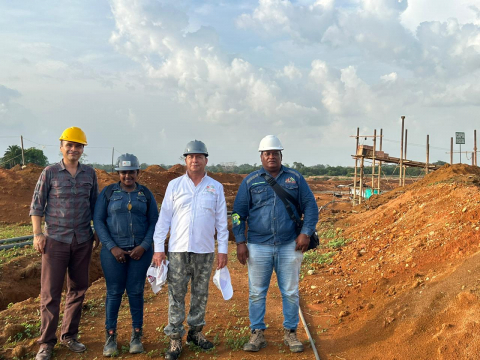
EfD researchers help lay out sustainable roadmap for colombian mining
The mining industry is vital for Colombia’s economy, but it is linked to major environmental and...

Researchers and media joined forces to raise air pollution awareness in India
In northern India, where air pollution is a growing health crisis, researchers in collaboration with...
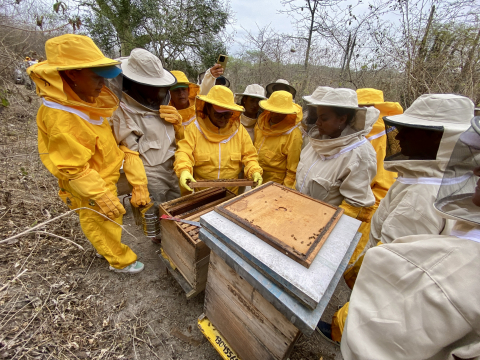
Rural Latin America: Scaling up climate resilience
Can climate adaptation take root in public planning, local finance, and community action...

EfD Uganda helps the government integrate natural capital in economic planning
Researchers from EfD Uganda have developed the Model for Natural Capital Policy Assessment (MONCAP)...

Research helped shape China's environmental disclosure reform
In recent years, China has taken important steps to improve environmental governance. One of the...