Analysing the socioeconomic characteristics of fisheries-dependent communities in the context of the blue economy in Ghana

Submitted by Vicentia Quartey on
EfD Authors:

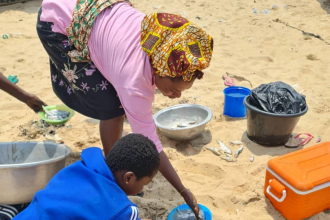
For centuries resource economists have persistently debated and discussed the potential of the green economy and how it should be protected and used sustainably. Most studies to date on the economic value of natural resources have thus concentrated on the green economy and how countries could harness its resources to achieve growth and development. However, perhaps the blue economy (i.e., ocean resources) could also help achieve growth and development. Studies on the blue economy are concept notes, reports and literature reviews on the evolving definition of the concept.

Fisheries

What drives stocking density decisions in the Chilean salmon industry? A retrospective analysis of stocking regulations

Submitted by Belén Pulgar on
EfD Authors:

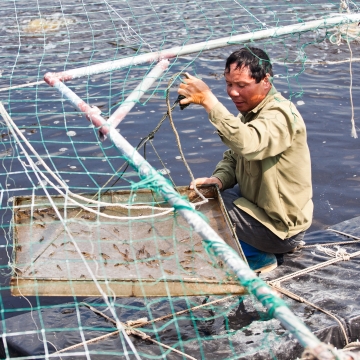
According to Chilean legislation, a salmonid concession holder must choose between two mutually exclusive stocking density systems: Stocking Reduction Percentage (SRP) or Stocking by Density. This study identifies the main determinants in the choice of stocking system and estimates their marginal effects. The results suggest that if the previously stocked species is Atlantic salmon (Salmo salar), the probability of stocking by SRP increases by 36.6%.

Fisheries, Policy Design

Poverty and gender considerations in marine spatial planning: Conceptual Framework

Submitted by Jane Nyawira Maina on

The report provides a framework for ensuring that marine spatial planning (MSP) does not worsen poverty and gender inequality in developing countries, and that potentially marginalised groups are appropriately considered and engaged in the MSP process.

This report provides guidelines for the steps of a more inclusive MSP process.

The findings indicate that a scorecard can be used to guide the social sustainability of the MSP process. The criteria in the scorecard include:

Biodiversity, Conservation, Fisheries, Forestry, Gender

Applying Economic Analysis to Marine Spatial Planning

Submitted by Marianela Arguello on

To protect the oceans' natural capital and promote sustainable economic growth, the world needs to move beyond a business-as-usual relationship with its marine resources. For increasing numbers of countries, the solution is the "Blue Economy" approach. It allocates ocean space across traditional sectors such as fisheries and new ones such as offshore wind farms, intending to protect resources and benefit current and future generations.

Biodiversity, Fisheries, Water

The informal sawn wood value chains in Uganda: structure and actors

Submitted by Jane Anyango on
EfD Authors:

With increasing scarcity and spatial dispersion of tree resources, Uganda's forest sector – similarly to several other countries in Sub-Saharan Africa – has experienced a shift from the large-scale concessionary model historically used to access and harvest forests, to more
versatile models involving smaller-scale operators. The timber they produce is sold not only locally in producer countries but also across borders and beyond. Yet small-scale operators largely work outside established regulatory frameworks and as such remain invisible to national and international

Agriculture, Biodiversity, Climate Change, Conservation, Fisheries, Forestry