Effort Optimization in Artisanal Fisheries with Multiple Management Objectives, Collective Quotas, and Heterogeneous Fleets

Submitted by NENRE Concepcion on

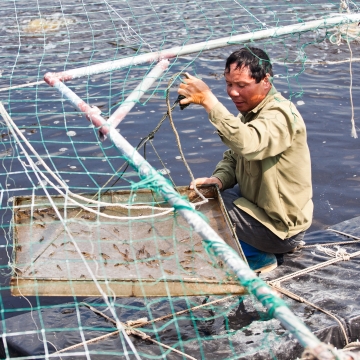
In this study, we analyse effort optimisation in common rights-based joint-stock artisanal fisheries when several objectives are pursued by the authorities and the fleets are heterogeneous. The purpose is to discuss policy options available to the authorities and their implications in terms of trade-offs between goals. We apply a multi-objective programming model to the sardine and anchovy artisanal fisheries in central southern Chile. The results suggest that the regulatory system generates inefficient solutions for profit and employment maximisation goals.

Fisheries

The SES Framework in a Marine Setting: Methodological Lessons

Submitted by admin on

The paper discusses the application of Elinor Ostrom’s Social Ecological Systems (SES) framework, using as example a community organization in Costa Rica, which collectively extracts turtle eggs.

Experiments, Conservation, Fisheries, Policy Design

Success factors for pairing conservation with enhanced forest and fish-based livelihoods

Submitted by admin on

In settings in which people rely directly on either forest or marine resources, protecting both the natural resources and livelihoods is challenging. Findings from Tanzania suggest that, where budgets are limited, key factors for a successful combination of livelihood and conservation policies include the strategic location of livelihood projects that target those most dependent on the protected resource rather than those most likely to cooperate with access restrictions.

Conservation, Fisheries, Forestry, Policy Design

Evaluation of the Status of the Namibian Hake Resource (Merluccius spp.) Using Statistical Catch-at-Age Analysis

Submitted by admin on

Namibian hake is the most important fish resource in Namibia. This monograph is a compilation of all the hake data, historic and recent, that has been used to inform stock assessment and management since the late 1970s.

Fisheries

The distributional impact of common-pool resource regulations

Submitted by admin on

Regulating common-pool resources is welfare enhancing for society but not necessarily for all users who therefore may oppose regulations. We examine the short-term impact of common-pool resource regulations on welfare distribution.

Fisheries

Lessons learned from investing in marine and coastal management initiatives in the East Asian Seas

Submitted by admin on
EfD Authors:

The concept that underlies the interventions of the Global Environment Facility (GEF) International Waters Program is adaptive management at the Large Marine Ecosystem (LME) scale across the sequence of interventions from assessment and analysis to development of regional strategic action programs and national implementation of action plans to address transboundary environmental concerns. The GEF has provided grants to recipient countries in the East Asian Seas region covering five LMEs since the early 1990s and amounting to about US$200 million.

Fisheries, Policy Design