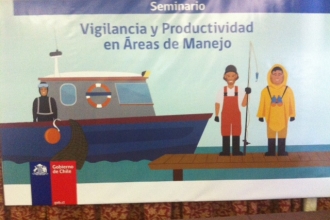
NENRE Researcher gives a talk on Chilean TURFs
Carlos Chávez gives a presentation in the context of a Workshop on Monitoring and Productivity of Chilean TURFs. The activity took place during June in the city of Puerto Montt, southern Chile, with…
Carlos Chávez gives a presentation in the context of a Workshop on Monitoring and Productivity of Chilean TURFs. The activity took place during June in the city of Puerto Montt, southern Chile, with…

Senior EfD Research Fellow and Research Fellow of NENRE-Concepción, Jorge Dresdner, was nominated associate editor of the journal Marine Resource Economics, for a period of three years from the first…
In many lower-income countries, the establishment of marine protected areas (MPAs) involves significant opportunity costs for artisanal fishers, reflected in changes in how they allocate their labor in response to the MPA. The resource economics literature rarely addresses such labor allocation decisions of artisanal fishers and how, in turn, these contribute to the impact of MPAs on fish stocks, yield, and income.
Both Tanzania’s and Costa Rica’s beaches provide important nesting sites for endangered sea turtles. Poaching of eggs by local people for food or for sale presents a major threat to these species, as do other predators. This harvesting of eggs in MPAs, and throughout Costa Rica, remains illegal, but enforcement on long beaches proves difficult. Both countries have active organizations that attempt to reduce this poaching, sometimes involving moving nests.
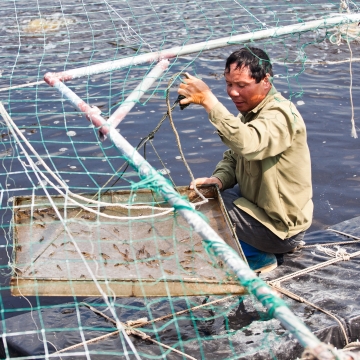
This study evaluates the impact on poverty produced by the establishment of salmon aquaculture in rural localities of Los Lagos region in Chile in the period 1992 - 2002.
The economic theory taught from textbooks in South African universities is 50 years out of date and needs an urgent revision, argues economist and fisheries expert Prof Tony Leiman. ‘International law…
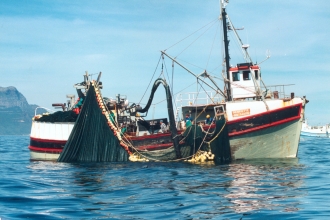
This research examines empirically the initial impact of artisanal organizations’ characteristics on the technical efficiency of Chile’s common sardine and anchovy artisanal fishery fleet operating in a collective quota (CQ) system.
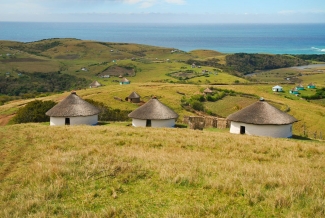
The South African node of the EfD network, the Environmental Economics Policy Research Unit at the University of Cape Town is working towards influencing South African policy in four key areas
Using a mathematical programming model, this study estimates the potential biomass supply from crop residues in China at various exogenously-given biomass prices and identified the areas that are likely to produce crop residues. The analysis indicated that China can potentially produce about 153.0-244.2 million dry metric tons of crop residues per year when biomass prices are larger than $90 per metric ton.
The potential effects of a redistributive fishing quota policy on the profits and employment of the artisanal fisher organizations is analyzed within a multi-objective programming model.