
Who is marginalized in energy justice? Amplifying community leader perspectives of energy transitions in Ghana

Submitted by Petra Hansson on
EfD Authors:

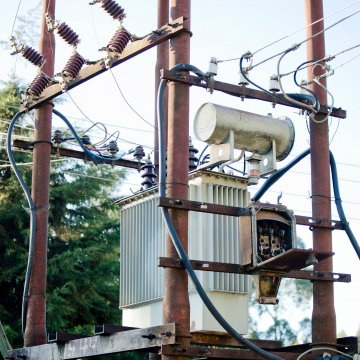
 There is a divide in energy access studies, between technologically-focused modeling papers in engineering and economics, and energy justice frameworks and principles grounded in social sciences. Quantitative computational models are necessary when analyzing energy, and more specifically electricity, systems, as they are technologically-complex systems that can diverge from intuitive patterns.

Climate Change, Energy, Land

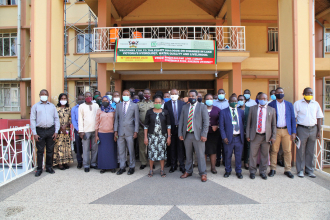
EfD-Mak Policy Brief on Governance of Natural Resources Utilisation In Uganda

Submitted by Jane Anyango on

KEY MESSAGES

Sustainable and efficient governance and utilization of natural resources requires:

1. Transparency, accountability, rule of law, inclusive participation and cooperation of all stakeholders and actors in natural resources. 2. Balancing economic, social and environmental goals in all government programs and plans including private investments.

Agriculture, Energy, Fisheries, Forestry, Land, Water

The effectiveness of feed-in-tariff policy in promoting power generation from renewable energy in Kenya

Submitted by Jane Nyawira Maina on
EfD Authors:

Feed-in- Tariffs (FIT) policies are used by many developed and developing countries globally as a mechanism to promote renewable energy (RE) development. This study analyses the effectiveness of FIT policy in the deployment of RE, drivers and challenges of the FIT policy in Kenya. In this study, qualitative data analysis adopts a thematic analysis approach whereby common themes are identified.

Energy