
Does Green Infrastructure Work? Precipitation, Protected Areas, Floods and Landslides
EfD Authors:
We use monthly municipality data for the period 2000-2015 in Guatemala and monthly district data for the period 1992-2019 in Costa Rica. We define relevant catchment areas using water flows to the population centers of the administrative units. Then, we calculate the precipitation inside and outside Pas within the relevant catchment areas, and test how the frequency of floods and landslides is affected by whether rain falls inside or outside PAs. We use a two-way fixed-effects panel data model. For Guatemala, we find no robust statistically significant effects on these types of disasters.
Maize (Zea mays L.) management in Yaxcaba, Yucatan, during the twentyfirst century’s first decade is consistent with an overall loss of landrace diversity in southeast Mexico
EfD Authors:
The status of genetic resource conservation in centers of crop diversity remains disputed. Recent case-study findings of persistent maize diversity in Yaxcaba, Yucatan, a municipality in southeast Mexico, have raised questions on earlier reports of widespread losses across the crop’s center of diversity in Mexico. We break down patterns in maize varietal richness in southeast Mexico to show that temporal trends in Yaxcaba are subsumed under spatial variation in this broader region and consistent with an overall loss of diversity.
Exploring the Potential and Challenges of Voluntary Carbon Markets in the Global South
The study identifies current energy markets and associated (actors) stakeholders in Africa. It will then recommend institutional structures that could reconcile the VCM with Articles 4 (binding
Achieving regional sustainability and carbon neutrality target in Brazil, Russia, India, China, and South Africa economies: Understanding the importance of fiscal decentralization, export diversification and environmental innovation
EfD Authors:
AbstractReaching decarbonization goals has become a top focus for several industrialized and emerging economies globally. The greatest effect of human behavior is global warming. Utilizing fiscal decentralization (FDST), export diversification (EDI), and environment‐related technological innovation (ERTI) may be necessary to address global pollution and accomplish environmental sustainability goals. Additionally, these strategies could aid various levels of government and nations in pursuing what they define as sustainable development.
Droughts and rural households’ wellbeing: evidence from Mexico
EfD Authors:
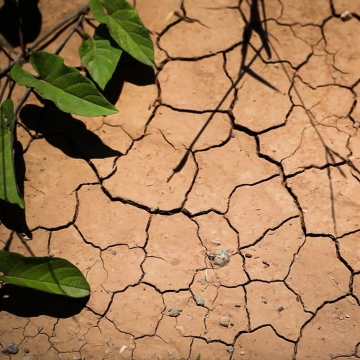
Climate change could increase the frequency and duration of droughts that affect Mexico. This is particularly worrisome because many agricultural communities in the country are poor and with limited capacities for adaptation. This study estimated the impact of droughts on rural households’ wellbeing in Mexico, specifically on per capita earnings, poverty, and children’s school attendance. To do this, we focused our empirical analysis on the effects of the 2011 drought, one of the worst droughts that have affected Mexico in the past 70 years.
Farmers’ Perception of Climate Change: A Review of the Literature for Latin America
EfD Authors:
Global climate is changing rapidly, and it is not clear if agricultural producers in developing countries will be able to adapt fast enough in order to mitigate its negative effects. In order to be willing to take adaptation measures, farmers need to perceive that the climate is changing or could change, and they need to attribute enough weight to this perception to take action. During the last two decades, the literature that examines farmers’ perception of climate change has gained ground, but it is still scant.
Swedish ports’ attitudes towards regulations of the shipping sector's emissions of CO2
EfD Authors:
Shipping is increasing today along with the sector's emissions of greenhouse gases. The awareness of the emissions has increased the pressure for regulations of the shipping industry. Regulating the sector is far from simple due to the complexity of the market and the evasive characteristics of the industry. We know from studies of road pricing that attitudes among stakeholders are important for a successive policy implementation. The objective of this paper is to capture the Swedish ports’ attitudes towards regulations of the shipping sector's emissions of CO2 .
Measures for reduced CO2-emissions from freight transport in the Nordic countries
EfD Authors:
Although there is an international obligation to reduce GHG from the transport sector by 2030, it appears that emissions, especially from heavy transport, continue to increase. In a project financed by NORDEN (Nordic Council of Ministers), measures for CO2-emissions from freight transport in the Nordic region, with emphasis on road transport, will be reviewed.
Sustainable Nordic cities with focus on climate smart mobility
EfD Authors:
The project - Sustainable Nordic Cities with Focus on Climate-Smart Mobility - aims to contribute to sustainable urban development by supporting the transition to fossil-free transport and accessibility in Nordic cities and urban regions. The potential to organise the Nordic society to be more transport-efficient is significant, and the remaining transports must become increasingly fossil-free.