Effects of Objective and Subjective Income Comparisons on Subjective Wellbeing
In this article we present results from the Cape Area Panel Study investigating
how income comparisons affect the subjective well-being of young adults and parents.

In this article we present results from the Cape Area Panel Study investigating
how income comparisons affect the subjective well-being of young adults and parents.

Effective kitchen stoves that use less firewood and emit fewer greenhouse gases are both cheap and available to the rural population in many developing countries. But the demand for the stove is low…
Do tropical forests provide natural insurance? Evidence on forest ecosystem services and human health from the Brazilian Amazon. Nature threads the very fabric of human lives in remote forest areas of…
Little is known about the cost of environmental regulations such as residential zoning restrictions and recycling mandates that target households instead of firms, partly because of significant methodological and data challenges. We use a survey-based approach, the contingent valuation method, to measure the costs of Mexico City’s Day Without Driving program, which seeks to stem pollution and traffic congestion by prohibiting vehicles from being driven one day each week.
The paper investigates the effects of climate change on food security in Kenya. Fixed and random effects regressions for food crop security are estimated. The study further simulates the expected impact of future climate change on food insecurity based on the Special Report on Emissions Scenarios and Atmospheric Oceanic Global Circulation Models. The study is based on county-level panel data for yields of four major crops and daily climate variables data spanning over three decades. The results show that climate variability and change will increase food insecurity.
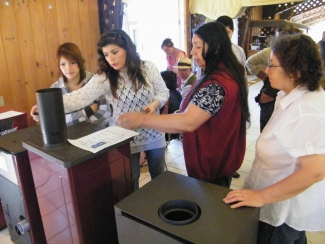
Air pollution caused by wood-burning in homes for cooking and heating purposes is one of the most important environmental problems in Chile, affecting thousands of families and causing early mortality
The project includes two studies. One project is on possible differences in subjective and objective risks in four different zones with different malaria exposure, and whether a person´s subjective
The study presented here considers the relative efficiency of planting tobacco and maize in the tobacco-producing Tabora region of Tanzania. The study used a 2013 survey that was conducted among smallholder farmers in the Tabora region. The aim was to investigate whether farmers are better off planting tobacco or maize. The paper briefly reviews the importance of agriculture in general and tobacco planting in particular on the Tanzanian economy. The paper then reviews the methodology used in the analysis, The Frontier Production Function.
Early diagnosis and timely treatment of malaria is recognized as a fundamental element to the control of the disease. Although access to health services in Tanzania is improved, still many people seek medical care when it is too late or not at all. This study aimed to determine factors associated with delay in seeking treatment for fever among children under five in Tanzania.