
The influence of human values on attitudes and behaviours towards forest conservation
Human attitudes and behaviours have been linked to the degradation of global biodiversity, particularly forest ecosystems. Indeed, effective conservation actions require that the attitudes and behaviours of affected individuals and communities are taken into account. While several studies have examined how human attitudes and behaviours affect conservation, it is still unclear which, and how, human value orientations influence conservation attitudes and behaviour. This is critical because attitudes and behaviours are underpinned by the complex concept of human values.
The role of mangroves in supporting shipping industry commitments to environmental protection and sustainable development
EfD Authors:
Due to the increasing speed and impacts of climate change, the United Nations Framework Convention on Climate Change (UNFCCC) and countries around the world are calling for active participation from all sectors in helping to resolve global environmental problems. The shipping industry, which plays a leading role in world commerce by transporting 90% of goods globally, has the potential to contribute significantly in the battle to adapt to and mitigate the impacts of climate change.
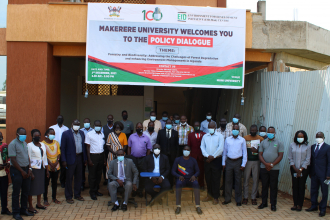
Academia and local government officials in the West Nile region discussed forestry and biodiversity conservation
Over 60 participants from academia, local government officials, the private sector, and civil society organizations met on 2nd December 2021 at Muni University to discuss the status of forests and…
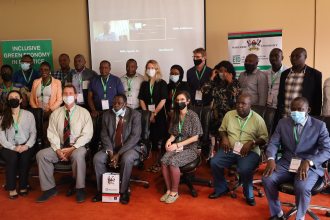
Uganda includes IGE vision in national plans and policies
The Government of Uganda will include the Inclusive Green Growth (IGE) vision in the national development plan, policies, and legal framework. This promise was given by the Director of the Directorate…
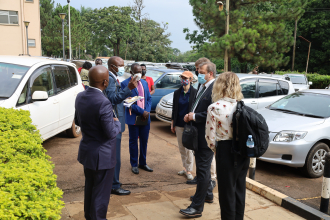
The Director of EfD Assoc. Prof. Gunnar Köhlin makes his maiden visit to Makerere University
A four-man delegation of Swedish environmental economists arrived at Makerere University on 22nd November 2021 to discuss collaborative initiatives on the environment and sustainable development. The…
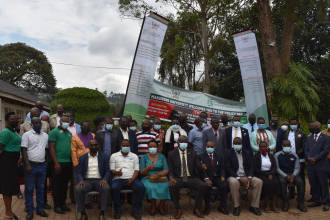
Government officials learned about the importance of forests and biodiversity
Over 50 officials from the Kabale district government were made aware of the need to protect the environment for sustainable livelihoods and future generations. This happened in a policy dialogue…
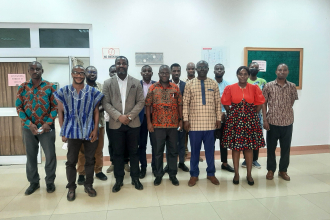
ENRRI-EfD Ghana outlines pathways for sustaining protected forests
ENRRI-EfD Ghana hosted a workshop on the topic: Sustaining protected forests in Ghana for forestry and environment stakeholders. The aim was to share and discuss the findings of a recent study on the…
Can payments for forest environmental services help improve income and attitudes toward forest conservation? Household-level evaluation in the Central Highlands of Vietnam
EfD Authors:
Payments for environmental services (PES) are considered an effective approach to solving both environmental and socio-economic issues. However, there lies a significant research gap in the context of their impact on income and attitudes toward conservation. Using household survey data and the propensity score matching technique, this study evaluates the impact of the payments for forest environmental services (PFES) program on household income and attitudes toward forest conservation in the Central Highlands of Vietnam.