Chilean researchers advocate waste reduction at the point of purchase
A collaborative study conducted by researchers from the University of Talca, the University of Concepción, and Universidad del Bío Bío, all part of the EfD (Environment for Development) network, has…
Stated preferences with survey consequentiality and outcome uncertainty – A split sample discrete choice experiment
Workshop on Randomized Controlled Trials (RCTs): From Theory to Practice
This two-day intensive workshop aims to equip course participants with the fundamental aspects of RCTs. We will discuss the rationales for impact evaluations, the issues of causal inference and the…
The SETI network met to work for a sustainable energy transition
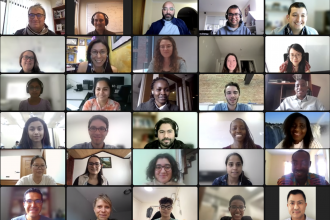
80 participants from around the world met online on June 15 and 16 at The Eighth Annual Meeting of the Sustainable Energy Transitions Initiative (SETI). The event included ongoing studies and the…
The endogenous formation of common pool resource coalitions
EfD Authors:
We present the results of framed field (lab-in-field) experiments designed to investigate the endogenous formation of common pool resource (CPR) coalitions when the resource is co-defended with costly monitoring by coalition members and sanctions for encroachment imposed by the government. The experiments were conducted with fishers who were members of Chile's territorial use rights fisheries (TURFs) and in the lab with Chilean university students. Consistent with theoretical predictions, the fishers frequently formed CPR coalitions, even when they could not deter outsider poaching.
Economic incentives and political inequality in the management of environmental public goods
EfD Authors:
We study how the allocation of power in a voting procedure affects the regulation and extraction of environmental public goods. In an appropriation game experiment, different endowments induce heterogeneous preferences among the three group members regarding their preferred quota, aimed at increasing social efficiency by restricting aggregate extraction. The players vote by submitting a proposal; one among the submitted proposals is implemented, selected at random, but across treatments, we vary the odds that a type sets the regulation.
Cooperation and innovation under production risk: evidence from a lab-in-the-field experiment
EfD Authors:
PurposeThis study analyzes the role of cooperative behavior in facing the risk of encouraging innovative agricultural production projects by small-scale farmers in the context of farmers in developing countries.Design/methodology/approachA within-subjects field experiment was conducted with small-scale Colombian panela cane farmers.