
Urban agriculture for an inclusive green economy model in Tanzania
EfD Authors:
According to the inclusive green economy (IGE) model, no one should be left out of the green economy revolution. To support an IGE approach, the Tanzanian government must develop policies to support urban agriculture ecosystems because, firstly, Tanzania is an agricultural country. Secondly, agriculture provides many benefits for households, such as boosting livelihoods and improving food security. Third, urban agriculture enhances urban biodiversity and produces ecosystem services needed for urban resilience to climate change and increases tree cover which absorbs greenhouse gases.

We can incorporate agriculture ecosystems into urban green economy in Tanzania: Dar es Salaam households are willing to pay
EfD Authors:
We are living in a crisis era, with competing land use for finite land and ill-informed myopic urban land-use policies that remain stagnant, in a world with a rapidly changing urban environment, such as the mushrooming urban agriculture. While smallholder farms in and around cities, in sub-Saharan Africa, provide many ecosystem services including boosting household income and nutrition, and access to land constraints these benefits. This paper examines the willingness to pay for urban farm plots, using a random parameter logit model.
Influences of various pricing points: an experimental study of plastic bags in Johannesburg, South Africa
EfD Authors:
Policymakers have little experience regarding designing the right levels of pricing for plastic bags. The ineffectiveness of charging for bags, in countries such as South Africa, makes it imperative that we map the demand curve. Getting the charge “right” depends on the size of the externality. Charging for bags is therefore an effective intervention to encourage consumers to carry their own bags to the stores. We employ a contingent behaviour (CB) dataset necessary to estimate the charge level that is likely to lead to a reduction in bag use over time.
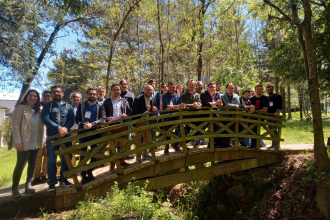
EfD Chile researchers discussed local environmental policy with politicians and other stakeholders
The Eigth Annual Meeting on Environmental Economics was marked by face-to-face attendance and included the participation of representatives from the academic, political, business, and civil society…

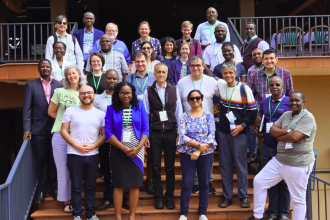
Productive sessions for the SETI collaborative at the Annual Meeting
EfD’s collaborative program Sustainable Energy Transition Initiative, SETI, had several activities at EfD’s Annual Meeting on September 22-26 in Kampala, Uganda. The question of how to achieve a…

Stakeholders discuss ways to reduce plastic pollution in the oceans
Plastic pollution of marine ecosystems is a global problem with severe consequences for wildlife and economic activity. The Sustainable Seas Trust (SST) hosted the second International Conference of…