Factors affecting compliance with rights-based fisheries management in Vietnam
Key Messages
|

Key Messages
|
AbstractWe evaluate the impact of a producer organization avocado contract farming intervention in Kenya that included (1) an agreement to sell to an avocado exporting company, (2) access to training, and (3) support to gain group‐level Global Good Agricultural Practices (GLOBALG.A.P.) certification as main activities. Using a (nonexperimental) doubly robust difference‐in‐differences design with farm‐level panel data from 2015 and 2017, we show that farmers began selling to the contracted company, were recently trained and received the GLOBALG.A.P. certification.
Contract farming is one potential mechanism that smallholder farmers in developing countries can use to participate in and benefit from domestic and global value chains (Okello and Swinton 2007; Barrett et al. 2012; Minot and Sawyer 2016; Ruben 2017; Ton et al. 2017). Linking smallholder farmers more directly with national and global consumers should increase both the demand and producer prices for their fresh produce. Increased access to and participation in such value chains increases farm income earned by smallholders.
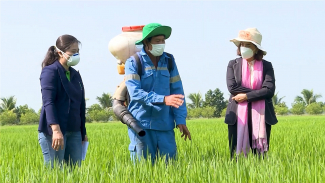
After three years of implementation, a laser-assisted land leveling project in the Mekong Delta of Vietnam has yielded significant economic and environmental benefits. Initiated and funded by EfD, the
Abstract: This study investigates the drivers of farmers’ dissatisfaction with market-specification contracts for finger millet crop in Kenya.
Smallholder banana farmers in Kenya grapple with declining farm productivity and low market prices in a fragmented, broker-dominated market. To address these challenges, the Kenya National Banana Development Strategy advocates for the adoption of contract farming. This research utilizes Difference-in-Differences (DID) regression analysis to assess the impacts of smallholder participation in banana contract farming on farm productivity and income.