FILTER
Displaying 101 - 110 of 228 publications
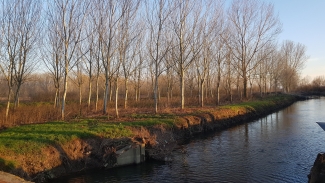
It is widely believed that forests help improve water quality by reducing soil erosion (and hence reducing silt) as well as filtering out nutrients and pollutants carried in water, which allows the…
| Research Brief | China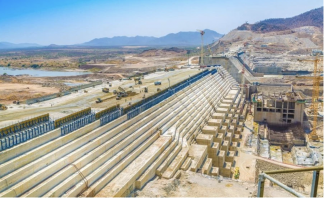
Abstract When construction of the Grand Ethiopian Renaissance Dam (GERD) is completed, the Nile will have two of the world’s largest dams—the High Aswan Dam (HAD) and the GERD—in two different…
| Peer Reviewed | Ethiopia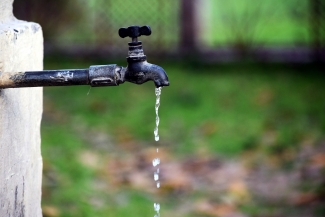
October 2020 When Cape Town, South Africa, experienced a severe drought, the city feared “Day Zero,” the day that water would no longer be supplied through water taps. We calculated Gini coefficients…
| Research Brief | South AfricaThis policy note provides a snapshot of water and sanitation measures implemented by governments in response to the COVID-19 pandemic in 14 countries in the Global South: Costa Rica, El Salvador…
| Peer Reviewed | South Africa, Ghana, Nigeria, Chile, Vietnam, Uganda, Kenya, Central America and MexicoThe water purification functions of forests represent one of the most frequently invoked examples of non-market ecosystem services that are economically valuable. Yet, there has been a paucity of…
| EfD Discussion Paper | ChinaAbstract The design of protected areas, whether marine or terrestrial, rarely considers how people respond to the imposition of no-take sites with complete or incomplete enforcement. Consequently…
| Peer Reviewed |A survey of 2075 households was conducted in Ho Chi Minh City, Vietnam in 2019 to estimate what respondents thought a “reasonable” monthly water bill would be for a randomly-assigned monthly quantity…
| Peer Reviewed | VietnamThis paper estimates the effect of environmental regulation on firm productivity using a spatial regression discontinuity design implicit in China’s water quality monitoring system. Because water…
| Peer Reviewed | ChinaBecause the main modes of transmission of the COVID-19 virus are respiration and contact, WHO recommends frequent washing of hands with soap under running water for at least 20 seconds. This article…
| EfD Discussion Paper | South Africa, Ghana, Global HubUsing a dynamic Computable General Equilibrium (CGE) model of Uganda, we simulate the effects of water shortages and their impact on agricultural production and the broader Ugandan economy. It is…
| Peer Reviewed | Uganda