
Government civil servants meet for peer learning on inclusive green economy
The Inclusive Green Economy program has now been up and running for about a year. On November 23-25 most of the 26 participants, civil servants from five East African countries, meet in person for the…

Julia won the Gunnar Köhlin's Best Master Thesis Award
The Gunnar Köhlin’s Best Master’s Thesis Award goes in 2021 to Julia Tatham. Her interest in energy poverty and the impact of indoor air pollution on people’s health awoke already in her early teens…
Submit proposals for the 2022 Society for Benefit-Cost Analysis conference
The Society for Benefit-Cost Analysis is now accepting proposals for its 2022 conference and professional development workshops. The conference will be held online in March; the workshops will be held…

Important to help the livestock sector in Africa cope with climate shocks
As a young boy in Ethiopia, he dreamed of being a fighter pilot, partly inspired by Top Gun. As he grew up, he made a 180-degree turn and is now a strong advocate for peace, which goes well together…
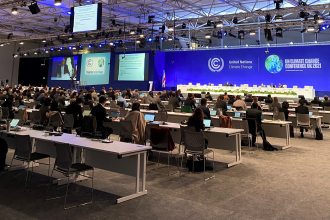
Finance Day at COP26 - can we trust free-riders to cooperate?
Wednesday, November 3, 2021. It is Finance Day at COP26 in Glasgow. I enter the venue through one of the many gates in the fence surrounding the Blue Zone. Security personnel checks my badge and my daily Covid-test result before allowing me through.
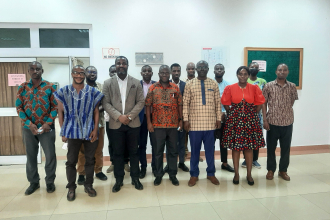
ENRRI-EfD Ghana outlines pathways for sustaining protected forests
ENRRI-EfD Ghana hosted a workshop on the topic: Sustaining protected forests in Ghana for forestry and environment stakeholders. The aim was to share and discuss the findings of a recent study on the…
Low-cost, low-emission 100% renewable electricity in Southeast Asia supported by pumped hydro storage
Rapid increases in electricity consumption in Southeast Asia caused by rising living standards and population raise concerns about energy security, affordability and environmental sustainability. In this study, the role of short-term off-river energy storage (STORES) in supporting 100% renewable electricity in Southeast Asia is investigated.
Vietnam's solar and wind power success: Policy implications for the other ASEAN countries
This study analyzes the factors that have facilitated Vietnam's recent rapid solar and wind power expansion and draws policy insights for other member states of the Association of Southeast Asian Nations (ASEAN). A policy-mix analysis focusing on targets, incentive instruments, enabling regulations, and policy implementation is carried out, informed by semi-structured interviews with 20 Vietnamese experts during the period January–March 2021. A comparative analysis between Vietnam and the other ASEAN countries provides policy insights.
Carbon pricing in Vietnam: Options for adoption
This paper investigates options for carbon price adoption in Vietnam, with a focus on model designs capable of meeting the country's updated Nationally Determined Contribution (NDC). We employ an ex-ante policy evaluation across environmental, economic, social, and political dimensions, drawing on interviews with key stakeholders. A multi-criteria analysis is also pursued to provide an overall comparison across policy options.