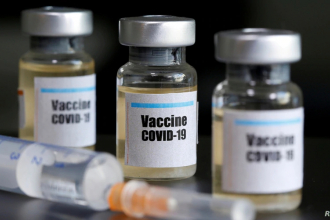
Vietnam needs a billion USD for the COVID-19 vaccine: it is completely realistic according to an EfD study
76% of respondents from a survey is willing to pay 700,000 VND (about 30 USD) for a two-dose COVID-19 vaccine.
76% of respondents from a survey is willing to pay 700,000 VND (about 30 USD) for a two-dose COVID-19 vaccine.
This research paper aims to understand the effects of time spent in domestic work, including childcare, on women’s mental health in Ghana. The paper adopted a triangulation convergence mixed methods approach. The quantitative information was sourced from two waves (2009/ 2014) of the Ghana Socioeconomic Panel Survey (GSEPS) while qualitative information was obtained from in-depth interviews with couples and key informants from five (5) regions, representing diverse ethnic backgrounds, in Ghana.
The varying social representations of, and cultural preferences for, body size and their implications for sexual behaviour and risk are necessarily contextual. However, the representational paucity of this literature across developing countries is unfortunate, considering the graver implications of risky sexual behaviour. Thus, we examined the relationship between body size and risky sexual behaviour among sexually active women in a sub-Saharan African country, Ghana.
The tradeoff that women face between work and family depends largely on a country’s institutional settings. Provisions like stable employment, maternity benefits, and childcare services can affect women’s fertility behaviours. In Ghana, the majority of women work in vulnerable self-employment positions. Among paid female employees, the degree of job security also varies. Largely studied in the developed country context, job insecurity has been found to have important effects on women’s reproductive health outcomes. As yet, there is no consensus on the direction of effects.
There is a significant correlation between climate variability and the incidence of climate-sensitive diseases such as malaria. This has implications for the welfare of households affected by malaria especially in resource-poor communities. Vulnerability and resilience underpin adaptive capacity to malaria, hence understanding the relationship between the latter and welfare is critical for social welfare policy formulation.

EfD Chile is working side-by-side with the Ministry of the Environment in the design of a wood stove replacement program and is now participating in developing strategies related to government urban
Abstract
Introduction
Rapid urbanization increases competition for scarce urban resources and underlines the need for policies that promote equitable access to resources. This study examined equity and social inclusion of urban development policies in Nigeria through the lenses of access to health and food/nutrition resources.

New research shows that it gets harder for people to work when it gets hot, and this may lead to a reduction in national output in warmer years. A hotter climate may also lead to increased income…

Who: E. Somanathan Position: Professor, Indian Statistical Institute Info: Electric stoves as a solution for household air pollution: Evidence from rural India. When: Monday, April 12th, 12:05 – 13:00…