Risk Aversion: Experimental Evidence from South African Fishing Communities
EfD Authors:
We estimate the risk attitudes of a large sample of individuals from various fishing communities along the west coast of South Africa.
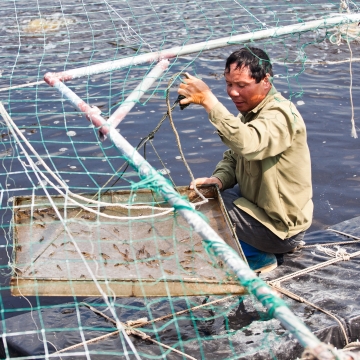
We estimate the risk attitudes of a large sample of individuals from various fishing communities along the west coast of South Africa.
Please join us for IIFET’s 16th biennial conference: IIFET 2012 Tanzania Visible Possibilities: The Economics of Sustainable Fisheries, Aquaculture and Seafood Trade The general theme of the…
In this paper, choice experiment was applied for valuation of Lake Tana’s fishery and watershed.
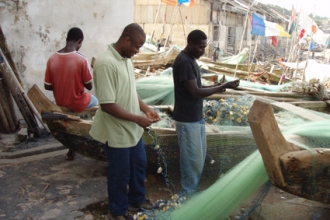
Press release from University of Gothenburg, School of Business, Economics and Law, Environmental Economics unit, 24 May 2011 People living in coastal areas in Africa can rarely utilise their entire…
CINTERA is designed to improve knowledge of ecosystem response to eutrophication and management of eutrophication in different marine fjord ecosystems and zones in Norway and Chile. The outcome of the field studies will be the determination of the most pronounced chemical and bioindicators of eutrophication in different conditions; this knowledge will give us the ability to improve monitoring activities in the future for early detection and management of the eutrophication problem.
CINTERA is designed to improve knowledge of ecosystem response to eutrophication and management of eutrophication in different marine fjord ecosystems and zones in Norway and Chile. The outcome of the
Fishers in developing countries do not have the resources to acquire advanced technologies to exploit offshore fish stocks. As a result, the United Nations Convention on the Law of the Sea requires countries to sign partnership agreements with distant water fishing nations (DWFNs) to exploit offshore stocks. However, for migratory stocks, the offshore may serve as a natural marine reserve (i.e., a source) to the inshore (i.e., sink); hence these partnership agreements generate spatial externality.
To understand under which conditions a co-management alternative (a shared effort between the central government and the local community) might work to guarantee the sustainable use of a complex
This paper describes the development and rationale of a holistic and transparent approach for evaluating the ecological, social and economic trade-offs in water allocation in order to set the ecological Reserve (freshwater allocation) to aquatic ecosystems.