Does Green Infrastructure Work? Precipitation, Protected Areas, Floods and Landslides

Submitted by Marianela Arguello on

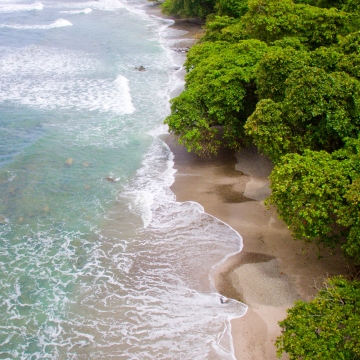
We use monthly municipality data for the period 2000-2015 in Guatemala and monthly district data for the period 1992-2019 in Costa Rica. We define relevant catchment areas using water flows to the population centers of the administrative units. Then, we calculate the precipitation inside and outside Pas within the relevant catchment areas, and test how the frequency of floods and landslides is affected by whether rain falls inside or outside PAs. We use a two-way fixed-effects panel data model. For Guatemala, we find no robust statistically significant effects on these types of disasters.

Biodiversity, Climate Change, Conservation, Forestry, Land

Effects of More Stringent Sulphur Requirements for Sea Transports

Submitted by Mark Senanu Ku… on
EfD Authors:

In 2008 the International Maritime Organization (IMO) decided on more stringent requirements from 2015 for airborne emissions of sulphur dioxide from sea transports in the sulphur emission control areas (SECA). The European SECA comprises the Baltic Sea, the North Sea and the English Channel. The paper contains an overview of the European studies that have been carried out to investigate the impacts of IMO's more stringent sulphur requirements. All studies were carried out after IMO's decision in 2008 (which means that the decision was taken based on other reasons).

Conservation, Policy Design

Dive industry perspectives on the threats to coral reefs: A comparative study across four Asia-Pacific countries

Submitted by Luat Do on
EfD Authors:

The combined effects of climate change, marine tourism and other stressors threaten the ecological and economic sustainability of coral reefs. This study investigates dive industry stakeholder awareness of the threats to coral reefs through structured interviews with Dive Masters, company managers and marine management agencies in Vietnam, Australia, Malaysia and Indonesia. Stakeholders from all locations have observed degradation of local reefs. Destructive fishing was identified as the principal threat in all regions except Australia.

Conservation, Policy Design