
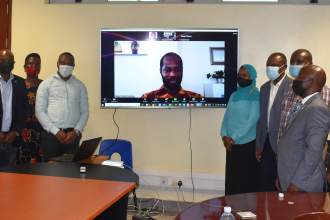
Makerere wins two EfD 2021 Sida Grants worth USD 144,918
A team of researchers from Makerere University led by Dr. Aisha Nanyiti and Dr. Fred Matovu have won two of the Environment for Development Initiative (EfD ) 2021 Grants worth USD 144, 918 funded by…
|
Air Quality, Carbon Pricing, Climate Change, Covid-19, Energy, Forestry, Gender, Health, Urban |
Uganda
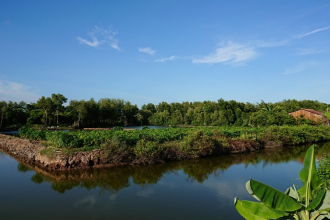
How effective is mangrove management decentralization in the Mekong Delta, Vietnam?
Does a devolution policy of forestland management to households help conserve forests? Does giving land use right as a property right or as per contract work better? A recent EfD research titled “Does…
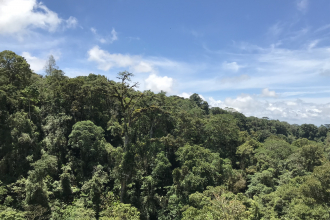
Research project on Payment for Ecosystem Services aims at fighting deforestation
Roger Madrigal, Director of EfD Central America, will coordinate a five-year research project on Payment for Ecosystem Services (PES). The purpose is to develop PES-models to tackle forest degradation…
Does the devolution of forest management help conserve mangrove in the Mekong Delta of Viet Nam?
EfD Authors:
In the decentralization of forest management, the state devolves forestland use right to communities. What if the state devolves the right directly to individual households, not to communities? Does this policy work and within this policy what devolution mechanism works better in terms of forest conservation? This paper addresses these questions using the context of mangrove forest in Viet Nam. Mangrove forest areas in Viet Nam have experienced a substantial decline during the last century.
Households and tree-planting for wood energy production – Do perceptions matter?
EfD Authors:
While forests are a primary source of energy for the majority of Tanzanian households, the forest cover is rapidly declining. The Tanzanian government has introduced a tree-planting campaign strategy, aimed at reducing pressure on natural forests.
Understanding forest users' participation in participatory forest management (PFM): Insights from Mt. Elgon forest ecosystem, Kenya
EfD Authors:
Participation of local communities in forest management decision-making has been promoted as a mechanism of improving livelihoods and forest conditions, yet the level of participation in many programs remains low. Using data from a cross-sectional survey of 924 forest-dependent households in Western Kenya, we examine the factors that support or constrain forest dependent people's participation in a Participatory Forest Management (PFM) program.
Decentralized Forest Management: Experimental and Quasi-experimental Evidence
EfD Authors:
Developing country forests sustain livelihoods, help to control flooding, recharge aquifers, pollinate crops, cycle nutrients, harbor biodiversity, and sequester carbon. As a result, forest loss and degradation have serious environmental and socioeconomic consequences. Decentralization and devolution of governance have arguably been the most important policy trend affecting developing countries’ forests over the past three decades.
The value of forest water purification ecosystem services in Costa Rica
EfD Authors:
Highlights
-
• Avoiding 1% of catchment's forest loss reduces chemicals use by 0.026% in Costa Rica.
-
• Improving the turbidity by 1% decreases 0.005% aluminum sulfate needed at the water plants.
-
• The value of water purification service by forests is USD 9.5 per hectare per year.
-
• The contribution of forest (per ha) becomes larger as the size of the catchment decreases.
Urbanisation and domestic energy trends: Analysis of household energy consumption patterns in relation to land-use change in peri-urban Accra, Ghana
EfD Authors:
Highlights
-
- Consumption of firewood decreases while charcoal and LPG increases with land-use change/intensity The factors that determine the choice of energy included Land-use change/intensity and the livelihood activities.
-
- Sustainable energy policy should embrace energy stacking and strongly encourage reforestation.