Adoption of solar energy in Kenya
Although African countries’ GHG emissions are comparatively low, the effects of climate change are still widespread and a reduction in emissions is crucial. In a bid to reduce emissions, there has
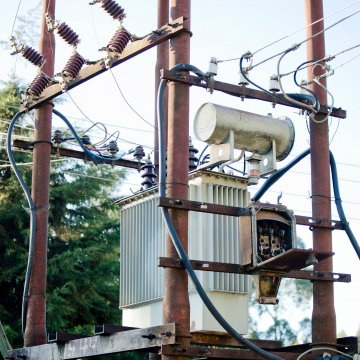
Although African countries’ GHG emissions are comparatively low, the effects of climate change are still widespread and a reduction in emissions is crucial. In a bid to reduce emissions, there has
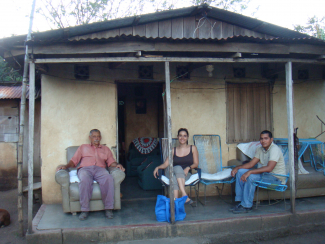
Payments for ecosystem services in Costa Rica: Does it matter who gets paid and why for the efficiency of payments for ecosystem services (PES) programs aimed to reduce deforestation and forest
This paper investigates the role of comparative advantage on biofuel policy adoption.
Results show that different countries have different drivers to create biofuel policies. GDP proves to be more significant for OECD countries, while arable land and feedstock prices are more significant for non-OECD countries. Land allocation may also be of importance. We speculate that a naturally endowed comparative advantage may not necessarily equate to a successful biofuel industry.
The purpose of the present article is to consider optimal trade policies for biofuels, taking into account the potential for carbon leakage and the complex set of policies used or discussed for biofuels. First, the authors consider the case of optimal trade policies and find that the combination of an import standard and a border carbon adjustment welfare dominates using only a border carbon adjustment (BCA).
EfD-Kenya actively participated in the preparation of the Kenya State of Environment (SoE) Report 2010. EfD-K Researchers Dr. Wilfred Nyangena and Geophrey Sikei were authors in the report. Dr. Nyangena was the Lead Author for Chapter 11 of the report which dealt with Policy options for action. Geophrey was a contributing author in Chapter 11 and Chapter 6 dealing with Land, Agriculture and Livestock.
One of the policy goals motivating programs to increase renewable energy investment is that renewable electric generation will help reduce emissions of CO2 as well as emissions of conventional pollutants (e.g., SO2 and NOx).
Research on energy demand in developing countries is important for many reasons. The existing widespread use of solid energy sources (e.g. fuelwood, dung, charcoal, coal, leaves, twigs) in Sub-Saharan…
Given the volatility of world oil prices and the recent all time high, which increased their popularity, bio-fuels have received a great deal of attention globally. The central questions of interest
Research on energy demand in developing countries is important for many reasons. The existing widespread use of solid energy sources (e.g. fuelwood, dung, charcoal, coal, leaves, twigs) in Sub-Saharan…
Another presentation in the 2012 EfD-CA Seminar Series at CATIE. Policymakers often rely on non-pecuniary, information-based programs to achieve social objectives. We review the evidence on the…