Structural Equation Approach to Modeling Social Norms in Women’s Education: A Case Study of India

Submitted by Ishita Datta on
EfD Authors:

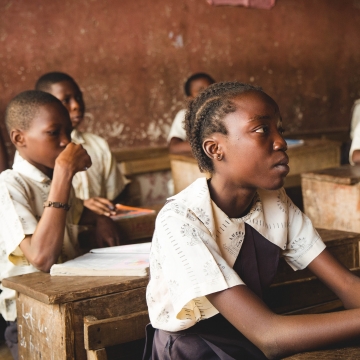
Studies on women's education often use indicators of social practices as proxies for social norms but fail to account for three critical features of norms: they are latent, multifaceted, and shaped by external factors. To address these gaps, the study employ the MIMIC (Multiple Indicators and Multiple Causes) model within a structural equation framework. This method enables the inclusion of various social practices, each serving as an imperfect representation of an underlying norm, while also identifying exogenous factors that can drive changes in these norms.

Gender

Poverty and gender perspectives in marine spatial planning: Lessons from Kwale County in coastal Kenya

Submitted by Jane Nyawira Maina on

Abstract: Kenya, like many other countries, is increasingly relying on a Blue Economy approach to ensure its sustainable development, an approach founded on the premise of poverty eradication by providing sustainable livelihoods and decent work, supplying food and minerals, generating oxygen, absorbing greenhouse gases, mitigating the impacts of climate change, and serving as highways for sea-based international trade.

Fisheries, Gender

Gendered sweetpotato trait preferences and implications for improved variety acceptance in Uganda

Submitted by Jane Nyawira Maina on
EfD Authors:

AbstractThe principal selection objective in crop breeding has for a long time been driven by agronomic gains like yield maximization and climate resilience. Nevertheless, the continued low adoption of new varieties and documented gender technology adoption gap has triggered re‐thinking of this strategy, with end‐user acceptability of released varieties a key strategy in breeding objectives.

Agriculture, Gender

Gendered sweetpotato trait preferences and implications for improved variety acceptance in Uganda

Submitted by Jane Nyawira Maina on
EfD Authors:

AbstractThe principal selection objective in crop breeding has for a long time been driven by agronomic gains like yield maximization and climate resilience. Nevertheless, the continued low adoption of new varieties and documented gender technology adoption gap has triggered re‐thinking of this strategy, with end‐user acceptability of released varieties a key strategy in breeding objectives.

Agriculture, Gender

Just Resilience in Kenya: Frameworks and Perspectives for Equitable Climate Adaptation

Submitted by Jane Nyawira Maina on

Abstract: The lived realities of many rural communities, and even the urban poor in Kenya, are characterised by poverty, inequality, high dependence on natural resources, rainfed agriculture, and sociocultural norms that influence their action or inaction. Recurrent droughts, floods, and changing rainfall patterns, largely caused by climate change and climate variability, further reinforce these communities' challenges.

Agriculture, Climate Change, Gender, Policy Design

Gendered demand for environmental health technologies: Evidence of complementarities from stove auctions in India

Submitted by Belén Pulgar on

We study if prior exposure to one environmental health technology – improved sanitation – complements or substitutes for additional household investments in another such technology — an electric induction cookstove. We conducted a cookstove demand revealing auction ten years after a random half of our sample had been exposed to an intensive sanitation promotion campaign in rural India.

Gender, Health