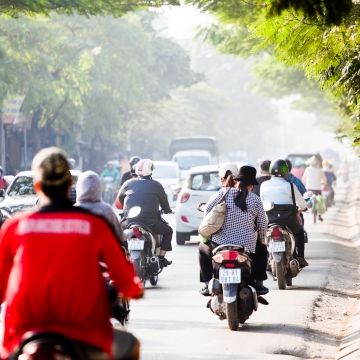
Environmental Impacts and Policy Responses to Covid-19: A View from Latin America

Submitted by César Salazar on

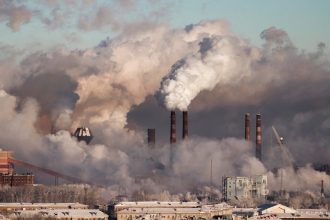
COVID-19 is currently having major short run effects with possible serious long run implications for the environment and the management of natural resources in Latin America. We discuss the possible effects of the pandemic on air pollution, deforestation and other relevant environmental dimensions across the region. With contributions from environmental economists from eight countries, we give an overview of the initial and expected environmental effects of this health crisis.
Air Quality, Covid-19, Energy, Health, Policy Design

Fuel choices and fuelwood use for residential heating and cooking in urban areas of central-southern Chile: The role of prices, income, and the availability of energy sources and technology

Submitted by César Salazar on

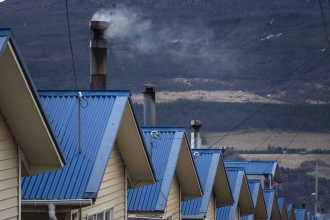
This paper empirically analyzes the determinants of fuel choices and intensity of fuelwood use for residential heating and cooking in central-southern Chile. By using information from a sample of 2761 households in nine urban areas, we first investigate households’ choices of the main fuel used for heating by means of multinomial models. Then we examine the intensity of fuelwood use through fractional probit models. These models allow analyzing the interdependence of fuel use by households, while taking into account households’ individual heterogeneity.

Air Quality, Energy, Policy Design

Firewood certification programs: Key attributes and policy implications

Submitted by César Salazar on

Evidence from south-central Chile shows that the concentration limits for PM10 and PM2.5, defined by both the World Health Organization and national standards, are systematically exceeded, affecting approximately 10 million people. Among the sources of this pollution, firewood use accounts for the largest share. This study assesses whether consumers value environmental, social, and legal attributes associated with the firewood certification programs. We used a discrete choice model based on a sample of 500 households.

Air Quality, Climate Change, Energy, Forestry, Policy Design