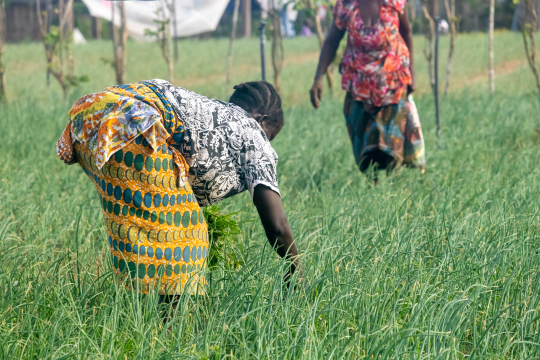
The unpredictable shifts in climatic patterns and limited adaptive capacity are adversely affecting agriculture and, in turn, the livelihoods of the Ugandan population (UBOS, 2024). To this end, the Government of Uganda, through the Ministry of Agriculture, working with other ministries, including the Ministries of Water and Environment, Energy, and Finance, has promoted the uptake of Climate-Smart Agriculture (CSA) (Zizinga et al., 2022).
CSA practices, e.g., conservation agriculture, improved seed varieties, water conserving irrigation, agroforestry, and integrated pest management, can increase productivity, strengthen resilience to climate change, and reduce greenhouse gas emissions. However, despite the potential long-term benefits, CSA uptake remains low. This policy brief summarizes key evidence, stakeholder views, and practical recommendations to accelerate CSA adoption.