Developing a Common Social-Ecological Systems Framework
This project contributes to an effort to develop such a common framework, or meta-theoretical language, which can be used by scholars in a consistent fashion to facilitate such comparisons and
Displaying 71 - 80 of 115 projects
This project contributes to an effort to develop such a common framework, or meta-theoretical language, which can be used by scholars in a consistent fashion to facilitate such comparisons and
This project is designed to build on previous synthetic work at the Workshop in Political Theory and Policy Analysis. It involves a group of 14 scholars collaborating to conduct a meta-analysis of
Neoclassical microeconomic theory of the consumer postulates that a rational consumer maximizes utility subject to a budget constraint. The direct implication of this theory is that the source of the
Various policies and programs aim to generate benefits to local people while conserving biodiversity or a particular species. In Central America, policies to promote sea turtle conservation in the
Reducing a country´s dependence on fossil fuels is central to mitigate climate change and to promote the use of cheaper energy sources. In Costa Rica most energy is generated using hydro-electrical
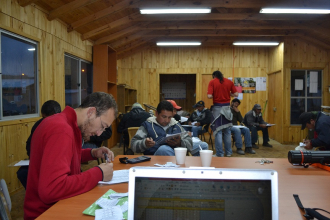
This project will use the tools of experimental economics to study behavioral issues related to both the protection of a common-pool resource from poaching by outsiders, and the enforcement of rules
The purpose of this project is to test a bargaining game developed by Saborio-Rodriguez, Kwasnica and Shortle (2013) using experiments in a laboratory. In the game an environmental agreement to deal
Beijing has notoriously severe air pollution and traffic congestion problems. Like many mega-cities in developing countries, it seeks to mitigate these problems by restricting vehicles from being
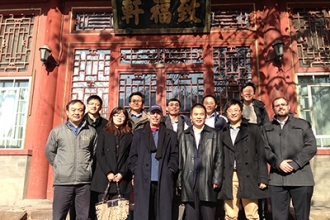
RFF’s Center for Energy Economics and Policy (CEEP) has partnered with institutions in China to create a new collaboration dedicated to improving energy policy in China: the Consortium for Energy
The project has the goal of providing more comprehensive and reliable information to climate scientists and politicians who must make decisions about climate actions. It will rely on collecting