
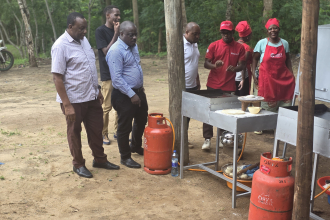
Researchers and Ministry of Energy support clean cooking among youth-led food enterprises
Government oversight, academic research, and innovation converge to accelerate the adoption of clean energy among youth in the food sector. EfD Tanzania researchers, together with researchers from the…
Ethical trade-offs in fast fashion: Exploring social, environmental, and health dimensions in clothing consumption

Consumers want to avoid the worst in fast fashion – but few are willing to pay for “best-in-class” sustainability
There is a clear demand in Sweden for more sustainably produced clothing, particularly when it comes to avoiding the most problematic production practices. However, consumers show limited willingness…

EfD Uganda reviews 2025 gains, unveils 2025–2029 strategy
The Environment for Development (EfD) Uganda center at Makerere University has reviewed its key achievements for 2025 and unveiled a five-year strategic plan focusing on energy transition, climate…

EfD research highlights the role of infrastructure to include youth in agricultural markets
Studies by EfD Tanzania researchers contribute to policy discussions on how the government’s infrastructure investments can better support youth participation in agricultural markets and trade. The…
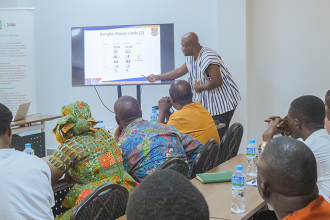
EfD Ghana bridges the gap between fisherfolk and insurance companies
EfD Ghana recently convened researchers, fisherfolk, and insurance providers to validate findings from the Fishing for Insurance in Ghana's Small-Scale Fisheries project. Using accessible…

EfD Ghana garners insights on emissions financing frameworks
Stakeholders from across Ghana's environment and climate sectors convened for an EfD Ghana workshop to examine the engagement processes preceding the Emission Levy Law, lessons from its implementation…
|
Climate Change |
Ghana
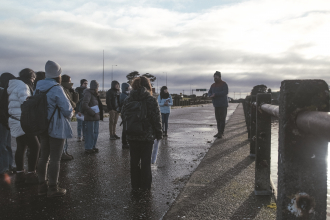
Researchers from Chile and Switzerland launch project to tackle energy poverty with sustainable heating
In Chile, as many as 95% of homes in the south-central regions use firewood, causing severe air pollution and respiratory issues. In Switzerland 65% of the households still rely on fossil fuels. To…