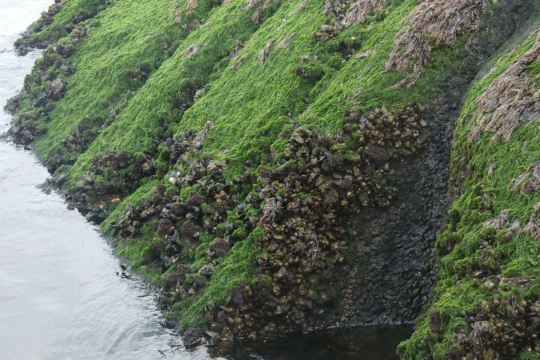
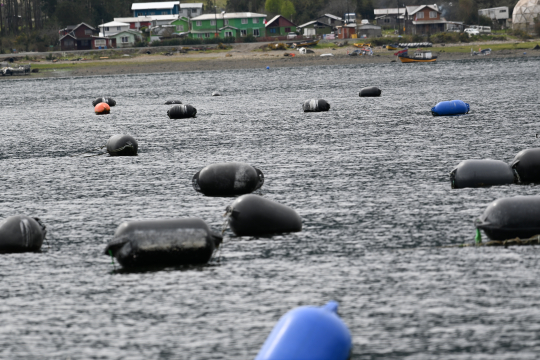
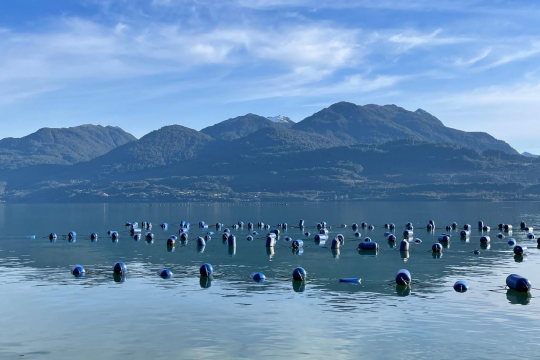
Chile has become a powerhouse in the global mussel industry, growing from a minor player in the early 1990s to the world's second-largest producer and exporter. This rapid expansion, known as the "mussel miracle," boosted production from approximately 2,000 tons to 400,000 tons by 2020. EfD researchers have studied and explored the forces behind this remarkable growth, its multiple impacts, and the challenges facing the industry.
The Chilean mussel industry's meteoric rise, particularly between 1994 and 1996, was the result of a combination of favorable conditions. The Los Lagos region in southern Chile provided ideal natural conditions for mussel farming. This was combined with significant advancements in aquaculture research and trade liberalization policies that opened new markets. The industry's growth was further fueled by crucial investments from both foreign and domestic stakeholders, who recognized the immense potential of Chile's coastal waters.
Research fellows, Carlos Chávez and Jorge Dresdner-Cid (EfD Chile), and EfD International Associate, Håkan Eggert (Sweden), have published the study The rise of mussel aquaculture in Chile: Causes, effects, and challenges, as part of an ongoing research project together with the INCAR Center (Interdisciplinary Center for Aquaculture Research of the University of Concepción), where they conducted interviews to key stakeholders on their perception of the development of the mussel industry in Chile.
NENRE EfD-Chile has been working on several specific projects related to this issue, such as perceptions of key players on the impact of the mussel industry in Los Lagos region, the impact of the Chilean mussel industry on mussel prices in the EU, the Aquaculture Performance Indicators in the mussel industry among other sectors, and the causes and challenges of the growth of the mussel industry.
“The research team has met with the association of mussel producers in Chile (Ami Chile) and participated in a seminar organized by INTEMIT (a research institute of the mussel producer organization) to present the results obtained in different projects,” explains Jorge Dresdner.
“We have also collaborated with them to access different stakeholders in the industry to obtain their vision of the development of the industry,” he commented.
Social impacts and future challenges
The expansion of the mussel industry has had a profound effect on Chile. Economically, it created more than 12,000 jobs in coastal communities, providing a vital source of income and development. Environmentally, mussel farming has offered surprising benefits, such as helping to mitigate eutrophication, a process where excessive nutrients in the water cause algal blooms and oxygen depletion.
However, this rapid growth isn't without its challenges and potential negative effects, which have been studied through semi-structured interviews with key informants in the Los Lagos region and an analysis of Aquaculture Performance Indicators (APIs).
Despite its success, the Chilean mussel industry faces significant sustainability hurdles. A primary concern is its heavy reliance on natural seed banks, which are a crucial source of young mussels for farms. This dependence makes the industry vulnerable to environmental fluctuations and over-exploitation. Additionally, the widespread use of extensive production methods poses long-term challenges, particularly in the face of climate change. The industry must find ways to adapt and innovate to ensure its continued success and environmental stewardship.
By Belén Pulgar.